For Anyone Interested in the Wildlife of the U.K.

 Cockchafers
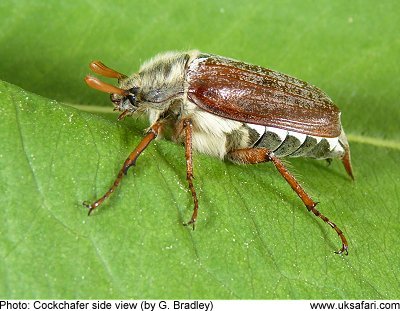
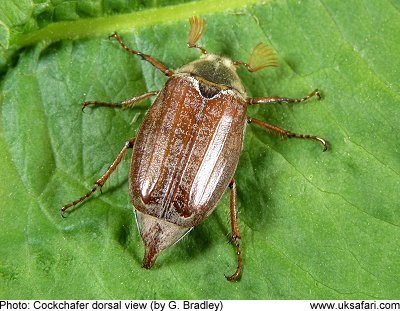
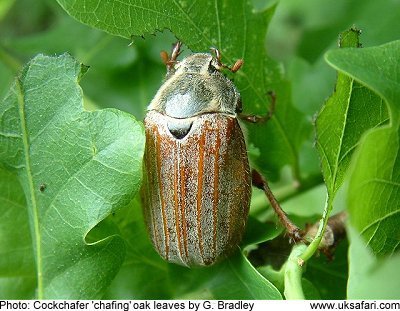

Scientific name: Melolontha melolontha
Size: Approx 30mm long
Distribution: Found throughout the UK, but more frequently seen in the south. In places where they're found, cockchafers are usually in large numbers
Months seen: Seen flying at dusk from May to July
Life span: Adult beetles live for up to 8 weeks
Habitat: Woodland, farmland, and gardens
Food: Adult cockchafers feed on leaves, and a favourite is the oak tree
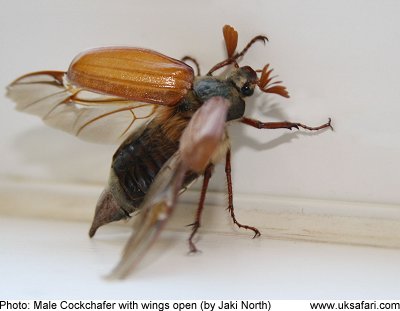
Special features: Cockchafers tend to swarm around trees and bushes, as they feed on the leaves. The wing cases of the adult beetles are covered in tiny grey hairs, giving them a dusty appearance. They're quite clumsy in flight, often colliding into things as they wobble about in the air. Their wings also make a loud buzzing sound as they fly.
The cockchafer has a three year life cycle. After mating the female digs down about 20cm into the soil to lay between 10 and 20 eggs. The eggs hatch after 21 days and the larvae remain in the soil for a further two years feeding on plant roots.
The cockchafer larvae are creamy-white in colour, with a brown head. They're equipped with a strong pair of pincers for chewing. If you pick one up it will make a squeaking sound by rubbing a row of pegs on its hind legs against its middle legs.
When they are about 5cm long they pupate in the soil. After pupation, the adult beetles emerge in October, but remain in the soil until the following spring.
Cockchafers are sometimes called 'May Bugs' because of the month they appear. In Suffolk they're also known as 'Billy Witches'.

Related Pages
- How Can You Tell a Male Cockchafer from a Female?
- UK Safari Beetle Section
- UK Safari Invertebrate Section
- UK Safari News