For Anyone Interested in the Wildlife of the U.K.

 Mink
Mink
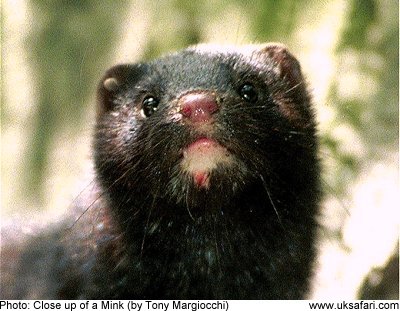
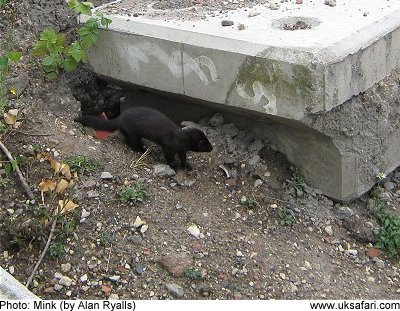
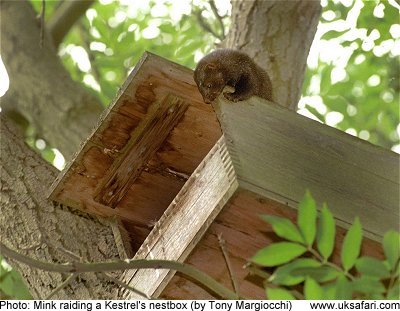
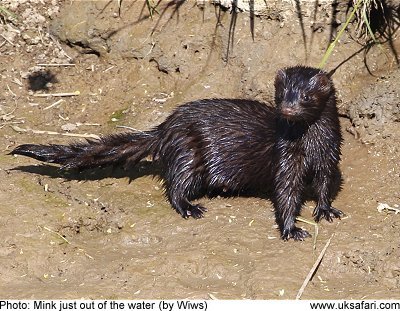
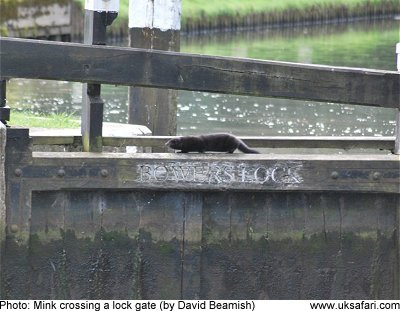
Scientific name: Mustela vison
Size: From tip of nose to base of tail approx 40cm. The tail is approx 12cm long
Distribution: Found throughout the UK except the Lake District and the mountains of Scotland
Months seen: All year round
Food: Waterfowl, birds, small mammals (including water voles) and fish
Habitat: Mostly found near rivers and lakes
Special features: The mink is an introduced species. It was brought to the UK from North America in the late 1920's to be bred for the fur trade. As a result of escapes and intentional releases mink have established themselves successfully in the wild.
Mink have a reputation for being blood thirsty and are known to kill other animals even when they are not hungry. Mink are strongly territorial, and a male will not allow another male on its patch, although females are occasionally tolerated.
The mink mating season starts around February. The gestation period is 39 days, although it can be much longer as Mink have the ability to delay implantation of the embryo in the uterus.
A female can have five or six young, known as kittens. The male takes no part in rearing the young. The kittens remain with the mother until the autumn when they are fully grown. They then go off to find territories of their own
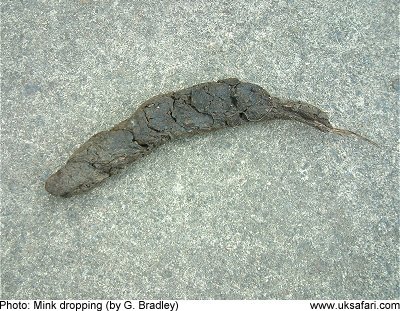
Mink droppings (see photo above) are a greenish-black colour and they smell revolting (worse than fox droppings). They are around 80mm long and usually contain fur, or fish scales, and bone.
Related Pages