For Anyone Interested in the Wildlife of the U.K.

 Common Lizards


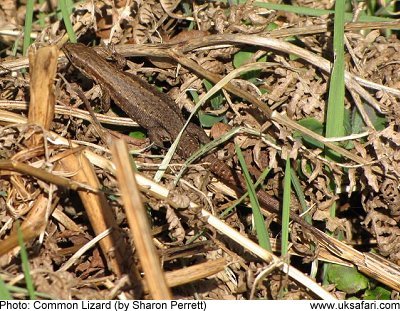
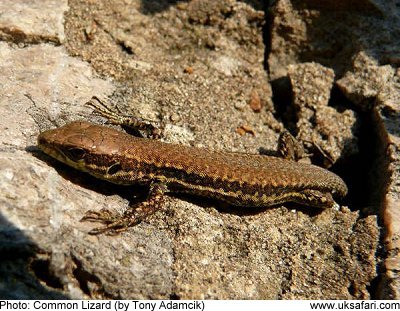
Scientific name: Lacerta vivipara
Size: Usually between 10 and 15cm long including tail
Distribution: Found throughout the U.K.
Months seen: March to October. During the winter Common Lizards hibernate underground
Habitat: Grassland, heathland, forest edges, and sand dunes
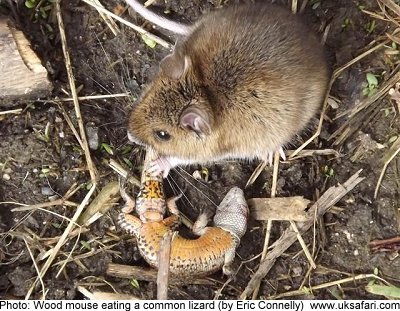
Food: Small insects and spiders
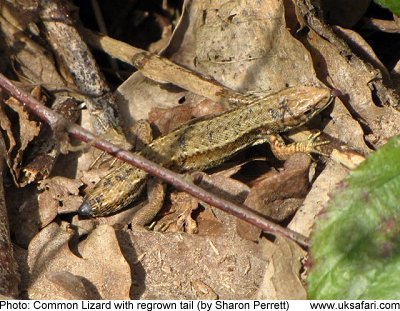
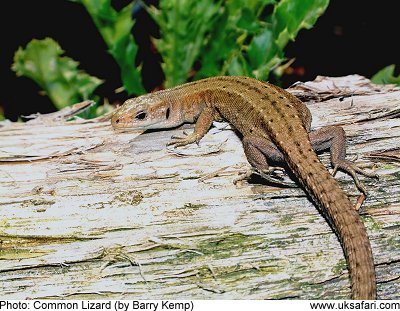
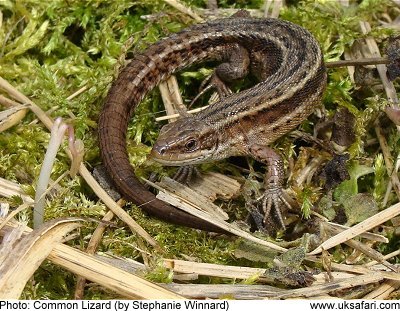
Special features: Common Lizards are also known as Viviparous Lizards. They are mostly olive-green coloured with black, brown and yellow markings. The head is distinctly pointed.
They can often be found lying on stones or logs in the sunshine, because they need the heat of the sun to warm their bodies. This makes them more mobile enabling them to catch their prey. Common lizards are also good swimmers.
Common Lizards are viviparous which means the females retain their fertilised eggs inside their bodies until they are almost ready to hatch. This helps to keep the eggs warm and when the time is right she lays the eggs. Within seconds the young lizards hatch out. The smooth snake, the adder and the slow worm are also viviparous.
Common lizards have an amazing way to escape capture from predators. If caught by the tail, they simply snap it off at a joint near the base, leaving their predator holding just the tail which continues to wriggle after separation. The lizard can grow a new tail if it lives long enough, although the new tail will be shorter and thicker than the original.
A cheap way to attract lizards is by leaving an old metal baking tin in a sunny location for them to bask on.
Related Pages