For Anyone Interested in the Wildlife of the U.K.

 Gannets
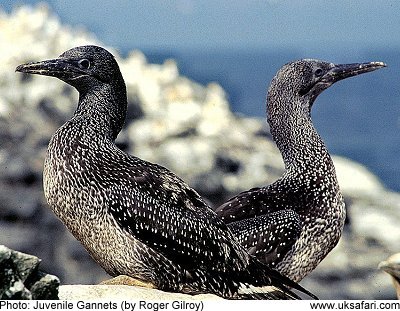
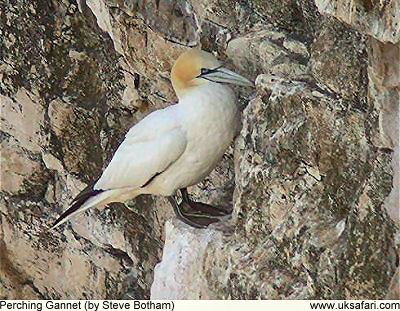
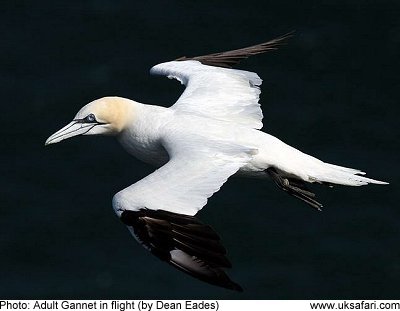
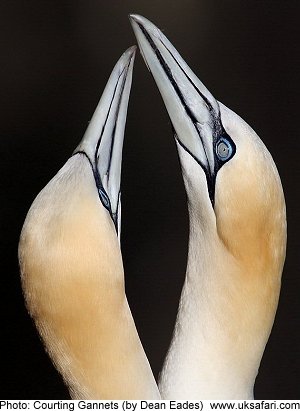
Scientific name: Morus bassanus
Size: Approx 90cm. Wingspan up to 190cm
Distribution: Found around most parts of the UK
Months seen: All year round
Habitat: Coastal cliffs
Life span: Up to 30 years
Food: Fish. Mostly herring, mackerel and sand eels
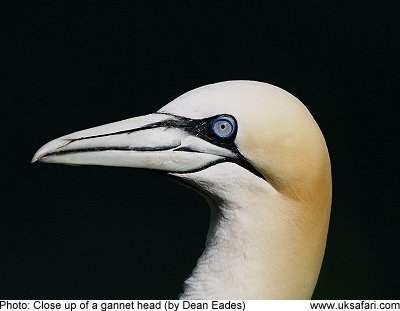
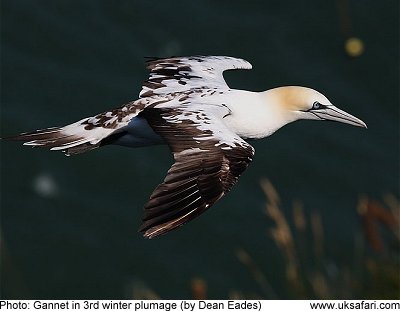
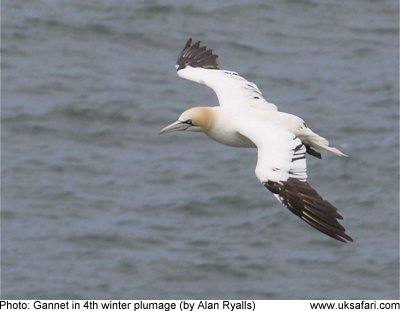
Special features: Gannets have white plumage with black markings on wing tips and around eyes, although the amount of black varies depending on the age of the bird (see photos above). The back of the head has an orange-yellow blush. The beak is a blue-grey colour, and the webbed feet are dark grey with thin blue lines along the toes.
Gannets are the largest breeding seabirds in the UK. They nest close together on coastal cliffs, and pairs often stay together for life. They have very elaborate courtship displays which involves facing each other and knocking their long bills together while pointing them up at the sky. Each pair rears a single chick each year.
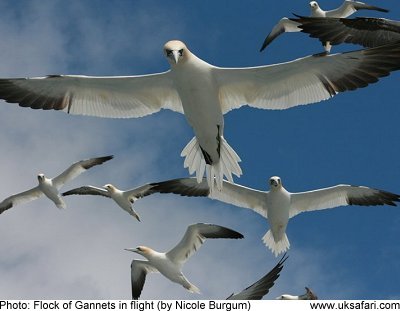
When feeding Gannets will often gather in large, noisy flocks over the surface of the sea before diving for fish.
The UK is home to 70% of the worlds population of gannets. St. Kilda off west Scotland has the largest colony of gannets in the world, and the Bass Rock on the east coast of Scotland has another large colony.
Related Pages