For Anyone Interested in the Wildlife of the U.K.

 Jays
Jays
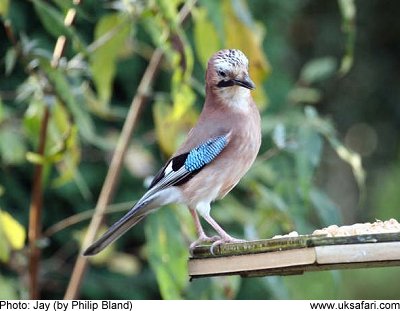
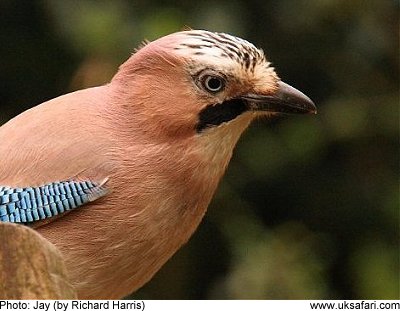
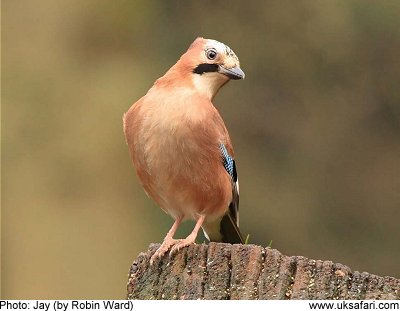
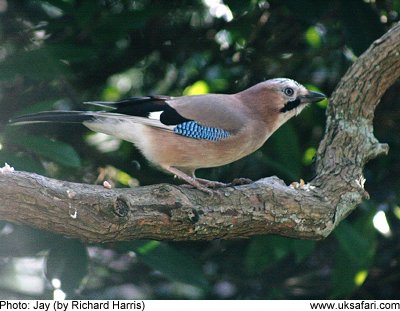
Scientific name: Garrulus glandarius
Size: Approx 34cm
Distribution: Found throughout most of the UK except northern Scotland
Months seen: All year round
Habitat: Woodlands, parks and gardens
Food: Nuts, acorns, berries and fruit
Special features: Jays are members of the crow family, and have been nicknamed the 'colourful crows'. They have pale pinkish-brown body plumage, with bright blue wing patches. They also have a black streaked head crest, which is raised when displaying to other birds.
In springtime you may come across large gatherings of jays. These are known as 'jay marriages'. The birds call and display to each other in an effort to find a mate.
Jays build a fairly small nest, low down in bushes and small trees. The female lays up to six eggs in April or May.
In autumn you can see jays hopping around the woodland floor in search of food. In September and October there is an abundance of acorns on the ground and jays collect these in large numbers. The ones which they can't eat straight away are buried in the ground as a winter food supply. Jays normally remember exactly where they have buried the acorns, but the ones which are forgotten, and begin to germinate, ensure the survival of the oak trees and provide food for future generations of jays.
Related Pages