For Anyone Interested in the Wildlife of the U.K.

 Labyrinth Spiders
Identify It > Spiders Section > Labyrinth Spiders >
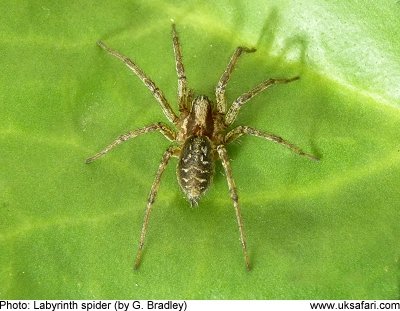
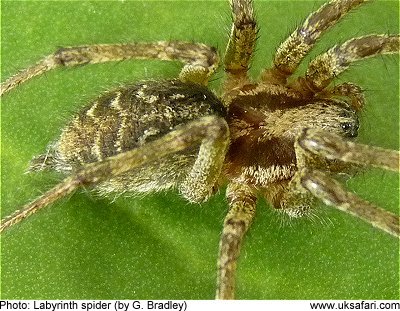

Scientific name: Agelena labyrinthica
Size: Head and body up to 18mm long
Distribution: Found in Wales and England, especially in the south counties
Months seen: June to October
Habitat: Found in long, rough grass, hedgerows and low down on trees
Food: Flies and other small insects
Special features: The abdomen of the labyrinth spider features a central pale brown stripe with a darker, more greyish band on either side. The darker bands have tiny white dashes or chevron markings running through them.
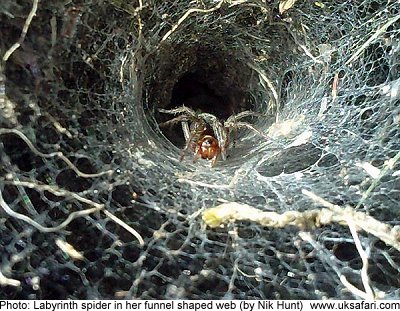
Labyrinth spiders produce a sheet web. It's so thick in places that it appears white in colour.
The web can be at ground level or up to 1.5 metres from the ground. The majority are found around 60cm from the ground. They are nearly always built along a south facing hedgerow, verge or grassy bank.
At one end there is a funnel shaped retreat, which can cause alarm because it is sometimes confused with other more dangerous funnel web spiders. Further down the funnel is a labyrinth of tunnels which gives this spider its name.
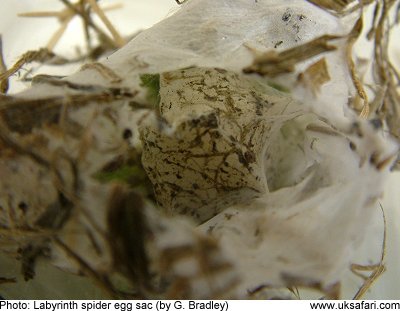
If you could find your way through the tunnels you would eventually find the reason for this mysterious construction. Hidden in the centre is the egg sac containing all the developing young.
The females remain with the young until they are ready to leave the web. Sometimes they die before the spiderlings go, and in this case the young will eat their mother.
Related Pages