For Anyone Interested in the Wildlife of the U.K.

 Lapwings

Scientific name: Vanellus vanellus
Size: Approx 30cm
Distribution: Found throughout the UK
Months seen: All year round
Habitat: In winter mainly on farmland and fields. In summer on wet meadows and marshes
Food: Worms and insects
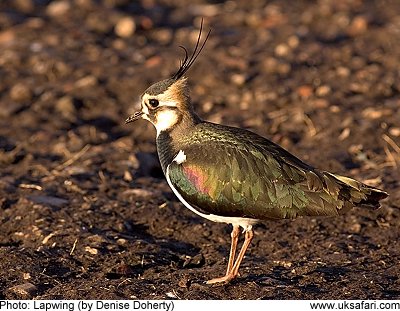
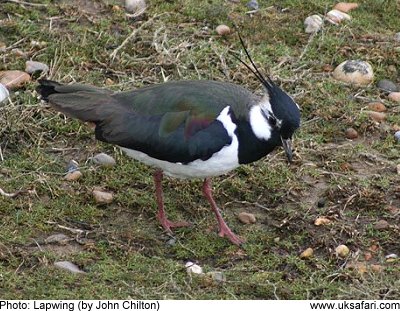
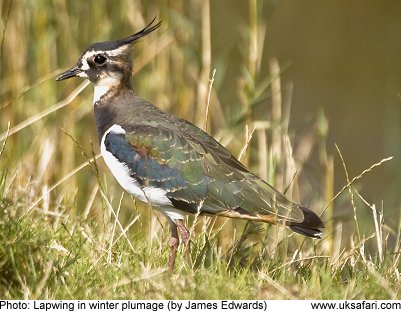
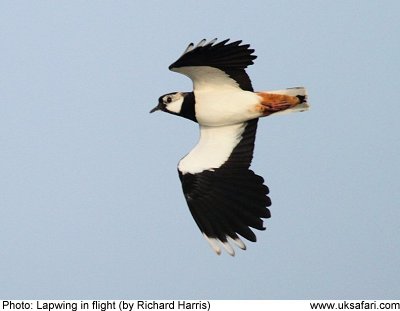
Special features: The lapwing is iridescent purple-green on the back and wings, with white plumage underneath. The legs are red and the base of the rump is light brown. There is a broad black bib around the neck and it has a wispy head crest which is unique among UK birds.
In flight the wings of the lapwing appear very wide and rounded. The call sounds like a shrill "pee-wit" and has earned it the common name of 'peewit'.
About a third of UK lapwings are resident although some move south. The remainder fly to Ireland or the continent. The majority of birds which survive the winter return to within 20km of their birthplace.
Lapwing eggs used to be a popular food, and in the 1800's they were collected in their thousands. Even as recently as the Second World War they were bought by the Ministry of Food to be turned into dried egg powder forming part of the nations egg rations.
Related Pages