For Anyone Interested in the Wildlife of the U.K.

 Lunar Hornet Clearwing Moths
Identify It > Moth Section > Lunar Hornet Clearwing Moths >
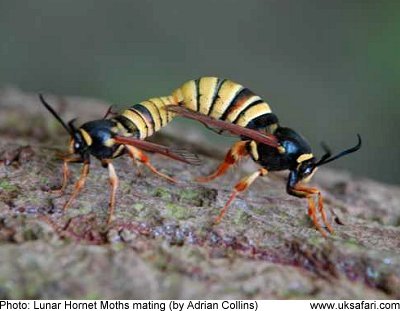
Scientific name: Sesia bembeciformis
Size: Wingspan approximately 40mm
Distribution: Found throughout the U.K.
Months seen: June to August
Habitat: Woodland, commons and damp meadows
Food: Larvae feed on the wood of sallows and willow
Special features: Lunar hornet clearwing moths get their name from their hornet-like colouring. To add to the effect they even have clear wings. After emerging from their cocoons, the young moths lose most of their wing scales leaving a transparent window on each wing.
If you take a close look you'll notice they don't have the usual narrow waist between the abdomen (back end) and the thorax (middle bit).
The caterpillars feed mainly on the roots of sallow, poplar and willow trees. The eggs are laid on the bark, and the larvae burrow into the wood.
Lunar hornet moths are not especially rare, but as you'd imagine, with just a casual glance they're easily overlooked as just another wasp.
Related Pages