For Anyone Interested in the Wildlife of the U.K.

 Pygmy Shrews
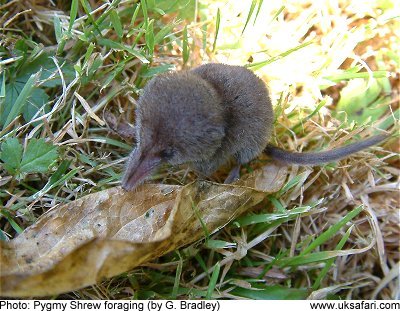

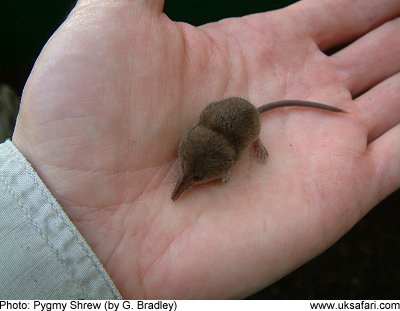
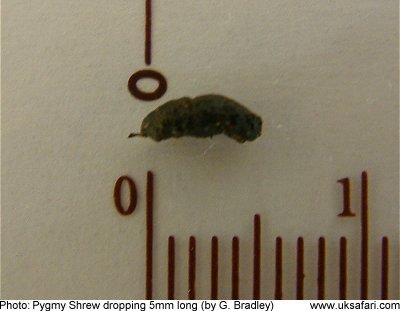
Scientific name: Sorex minutus
Size: Up to 55mm from tip of nose to base of tail. The tail can be up to 45mm long. Average weight is about 4 grams (roughly the same as a one penny coin)
Distribution: Found throughout the UK
Months seen: All year round
Life Span: Approx. 15 months
Habitat: Woods and hedgerows
Food: Spiders, beetles, woodlice, slugs and other small invertebrates
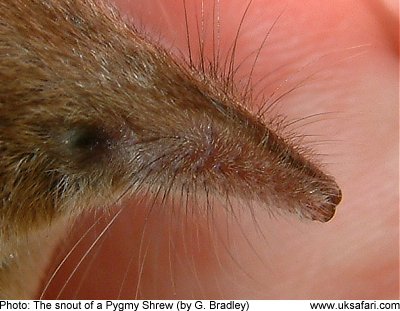
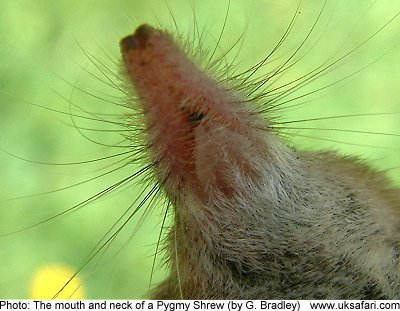
Special features: Pygmy Shrews are the smallest mammals found in the UK. They are in fact smaller than some of our insects, and are sometimes found sleeping in the burrows of beetles. Superficially they look like mice but with a longer, pointed snout. The fur colour is brown on top and greyish-white below. The fur grows thicker in the autumn.
Having such a tiny body, Pygmy Shrews needs to consume food every two hours in order to maintain their body temperature. Fully grown Pygmy Shrews are around a quarter of the size of a House Mouse. If they go much longer than two hours without food they can literally die, so for this reason they are active day and night. They are always actively searching for their next meal.
The breeding season lasts from April through to August. Female Pygmy Shrews produce between two and eight young per litter, in an underground nest. The gestation period is a little over three weeks, so they can have up to five litters in one year.
Related Pages