For Anyone Interested in the Wildlife of the U.K.

 Rabbits
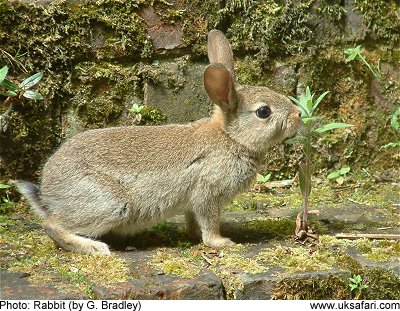
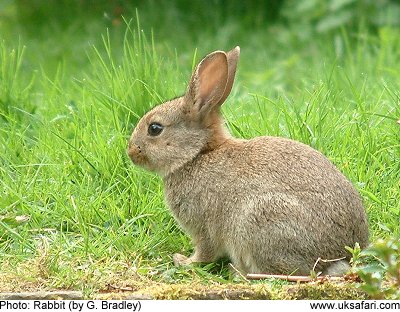
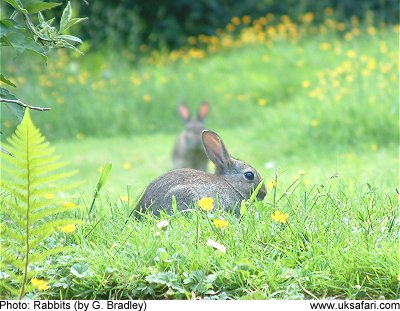
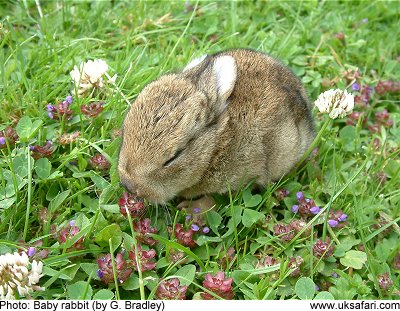
Scientific name: Oryctolagus cuniculus
Size: Grows to around 45cm long
Distribution: Found throughout the UK
Months seen: All year round
Life span: 1 to 9 years
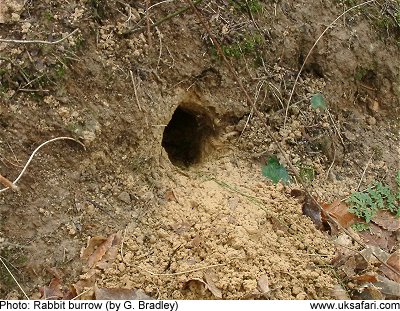
Habitat: Farmland, grassland and sometimes gardens. They live in underground burrows, known as 'warrens'
Food: Rabbits eat many types of vegetation including grass and farm crops. Where rabbits graze on downland they form an essential habitat for butterflies and other insects.
Special features: Rabbits were probably introduced into Britain from France in the 11th century by the Normans, who kept them for meat and fur. Descendents of the few which escaped from captivity can now be seen throughout the U.K.
A female rabbit can produce around 20 offspring each year, which are known as kittens. As a result the rabbit is now the most commonly seen mammal in Britain. In winter the population numbers around 40 million. When the population peaks in summer there can be as many as 300 million!
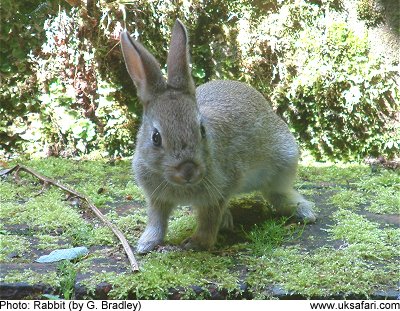
Rabbits have excellent hearing, and the position of their eyes gives them such a wide field of vision, they can almost see what's coming from behind. Their large eyes are also good for seeing in the dark, which is useful when they are underground in their burrows. Their whiskers also help them to feel their way through their tunnels.
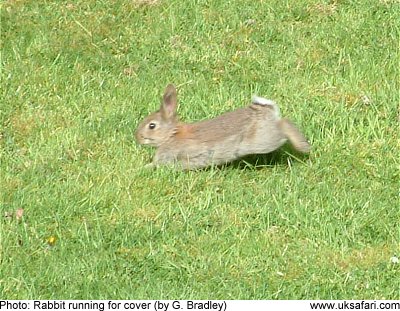
When disturbed, they flash their white 'powder-puff' tails as a warning to other rabbits of danger.
Wild rabbits in the UK can be affected by the VHD virus, and the Myxomatosis virus.
Related Pages