For Anyone Interested in the Wildlife of the U.K.

 False Widow - Cupboard Spider
Identify It > Spiders Section > False Widow - Cupboard Spider >
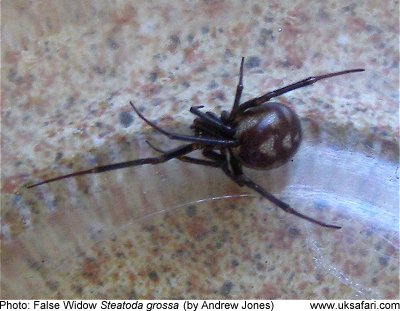
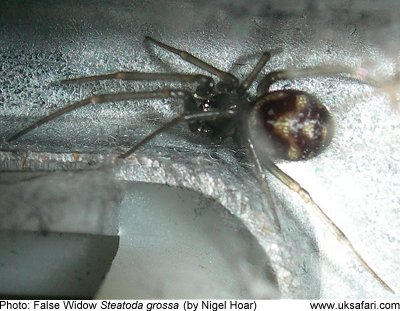
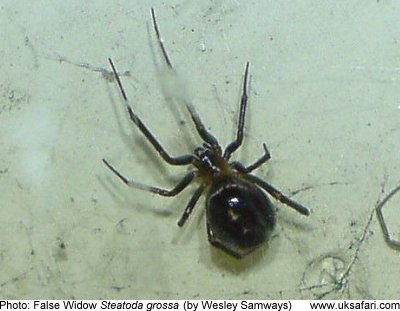
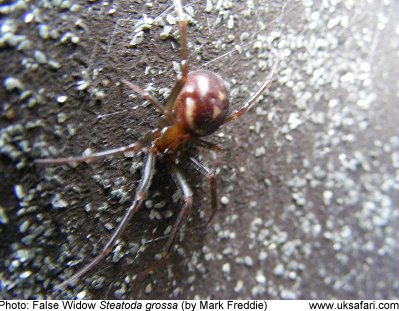

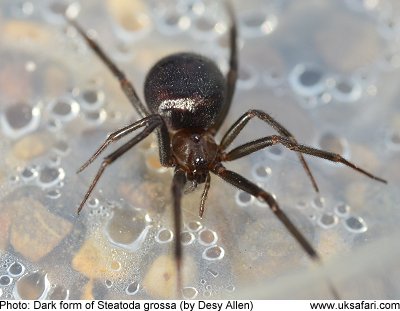
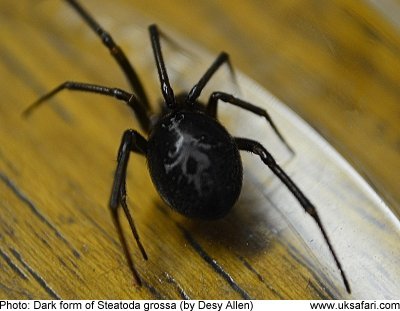
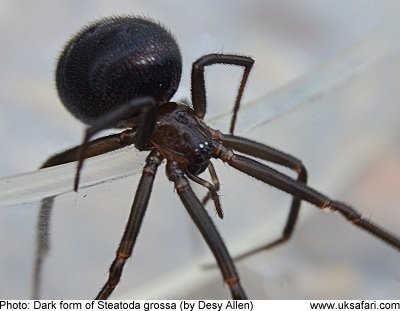
Scientific name: Steatoda grossa
Size: Head and body up to 10mm long
Distribution: Can show up anywhere in the UK, but more frequently found in the southern half of the UK, especially at coastal towns
Months seen: All year round
Habitat: Usually found in houses and out buildings, often in cupboards
Food: Flies and other small insects
Special features: The abdomen of this false widow is a red-brown colour with a crescent shaped stripe at the front and three pale triangular spots along the top. These markings vary from spider to spider. Sometimes they're cream coloured and sometimes they're purple or very dark brown.
In some cases the female is completely dark brown and frequently gets mistaken for the Black Widow (hence the common name). The real Black Widow has a distinctive red marking on the base of the abdomen.
The media is littered with tales of how dangerous False Widos spiders are. Every time someone gets bitten by one it creates a torrent of fear-inducing headlines. These stories generally highlight cases where the victim has had an allergic, and sometimes life-threatening reaction - the same as those experienced by people who are allergic to bee stings. For most people the bite from this spider feels something akin to a wasp sting. Unpleasant, but not deadly.
This is just one of the species found in the UK with the common name of 'false widow'. It's also sometimes called the Cupboard Spider. For other false widows see the links below.
Related Pages
- False Widow Steatoda bipunctata Fact File
- False Widow Steatoda nobilis Fact File
- UK Safari Spiders Section
- UK Safari Invertebrates Section
- UK Safari News