For Anyone Interested in the Wildlife of the U.K.

 Holly Blue Butterflies
Identify It > Butterfly Section > Holly Blue Butterflies >
Scientific name: Celastrina argiolus
Size: Wingspan approximately 33mm
Distribution: Found throughout most parts of England, Wales and N. Ireland. Absent from Scotland
Months seen: April to June and again from July to September
Life span: Up to four weeks
Habitat: Meadows, hedgerows, woodland edges and gardens
Food: Nectar and honeydew. The bright green caterpillars feed mostly on holly, ivy and bramble
Special features: If you see a blue butterfly in your garden, it's most likely to be the Holly Blue. It's the only blue butterfly which is regularly seen in gardens.
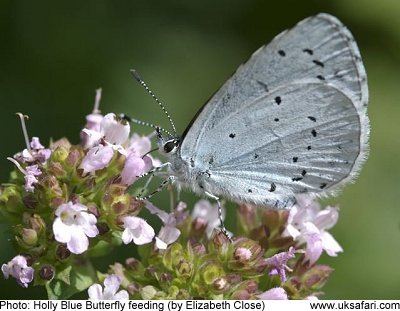
You can distinguish a Holly Blue from the other blue butterflies by the very bright silver-blue undersides of the wings. The only other blue butterfly with similar markings is the 'Small blue', but this is a much smaller butterfly.
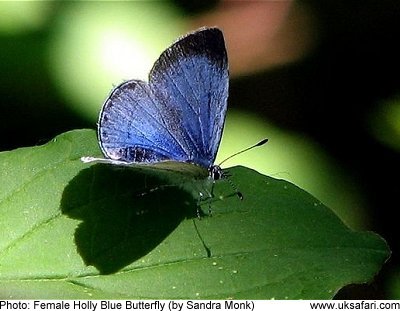
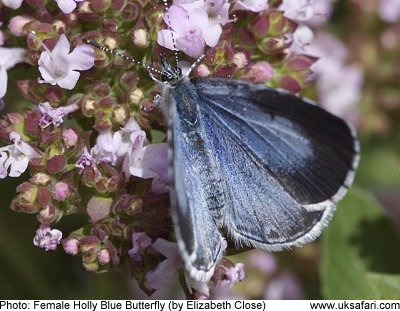
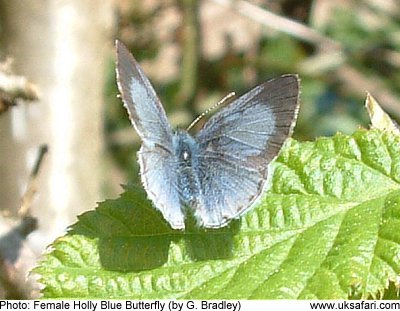
The Holly Blue nearly always rests with its wings tightly closed over it's back. When it opens its wings to fly, the vivid blue colouring of the forewings is revealed. The females (above) also have a broad black band near the edges of the wings. This species has two broods each year, and the second (summer) brood usually has a thicker, more prominent black band.
The Holly Blue caterpillar releases a sugary secretion which attracts ants. In return for this sweet snack the ants help to protect the caterpillar through pupation.
Related Pages