

 Bee Flies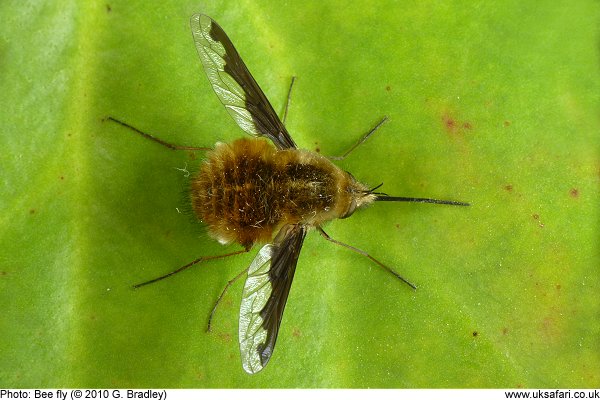

 Quick Facts
Scientific name: Bombylius major
Size: Up to 18mm long. Wingspan 25mm
Distribution: Found throughout the U.K. More common in southern England
Months seen: late March to June
Habitat: Gardens, parks and woodland rides
Food: Nectar. Larvae feed on honey and the larvae of bees
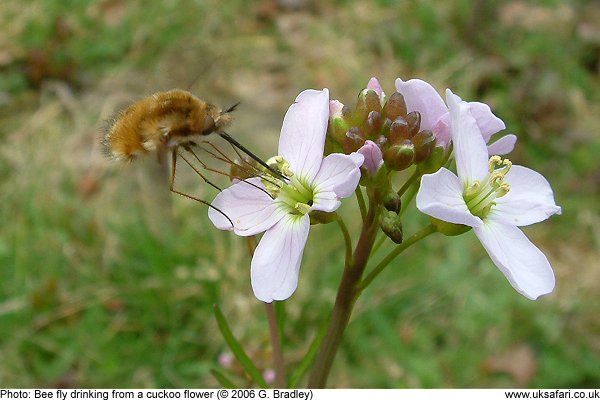
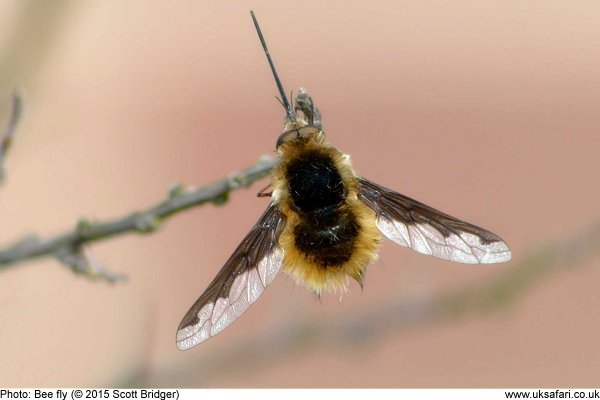
Special features: Bee flies look more like a bee than a fly - hence the name. They're sometimes called the 'Dark-edged Bee-fly', or the 'Large Bee-fly'. Like a bumble bee they are covered in hair. Bee flies are equipped with a long proboscis for drinking nectar from deep flowers. When at rest (which is rare) you notice the wings have dark markings along the leading edges.
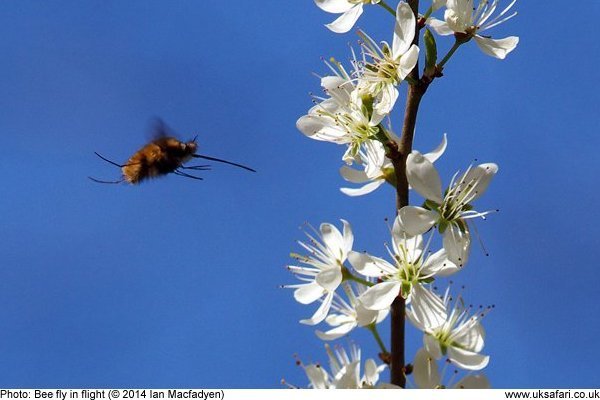
Bee flies are expert flyers, and make a high pitched buzzing sound while they hover around flowers, with their long, stilt-like legs dangling below them.
There are more than a dozen species of bee fly in the UK. They're one of the first insects on the wing each spring and are frequently seen on primroses and bugle.
 Related Pages



 Popular Pages
Amphibians, Bats, Badgers, Beetles, Birds, Birds of Prey, Bumble Bees, Butterflies, Caterpillars, Creepy-Crawlies, Deadly Spiders, Dolphins, Dragonflies, E-Postcards, False Widow Spiders, Free Newsletter, Frogs, Fungi, Garden Spiders, Glow-Worms, Grey Squirrels, Hedgehogs, House Spiders, Ladybirds, Mammals, Marine Mammals, Moths, Owls, Reptiles, Spiders, Toads, Trees, Wildlife Hospitals
Copyright © 2020 G. Bradley UK Safari. All rights reserved | About Us | Links | Contributors