

 Common Toads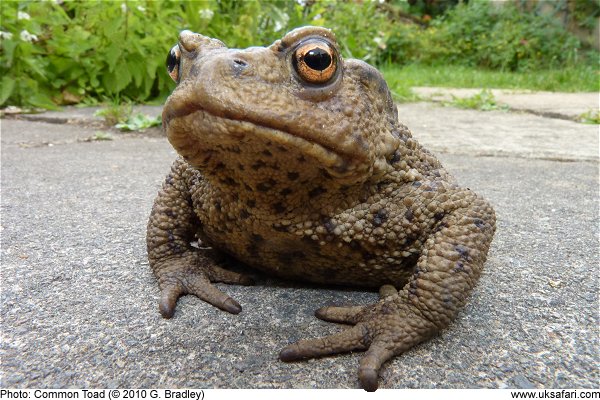

 Quick Facts
Scientific name: Bufo bufo
Size: Male toads are around 65mm in length. The females are around 90mm
Distribution: Found throughout England, Scotland and Wales, but absent from Ireland
Months seen: All year round, but mainly active from February to October
Habitat: Fields, hedgerows, gardens and woodlands
Food: Worms, slugs, spiders, beetles and other small invertebrates
Special features: Common Toads are Britain's largest and heaviest amphibians.
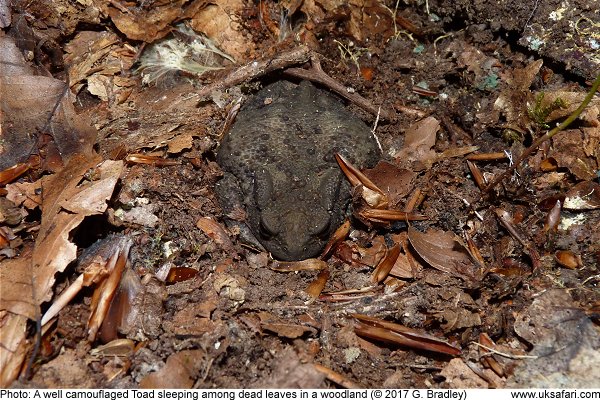
The colour of the toad varies according to the colour of the soil in its habitat. If the soil is a greyish colour, the toads skin tends to be greyish to blend in. If the soil is more brown, the toad tends to be more brownish.
Being creatures of habit, you can often find them in the same spot week after week, but because they are able to blend in with their background, and remain motionless for hours at a time, they can be difficult to spot.
A toad stalks its prey until it's close enough to shoot its sticky tongue out and catch it. To help swallow its food, it blinks to push the food down.
Although they are normally associated with water toads (and frogs) spend most of their lives on dry land. They will rest in the same hiding place each day, after their nightly hunt for food.
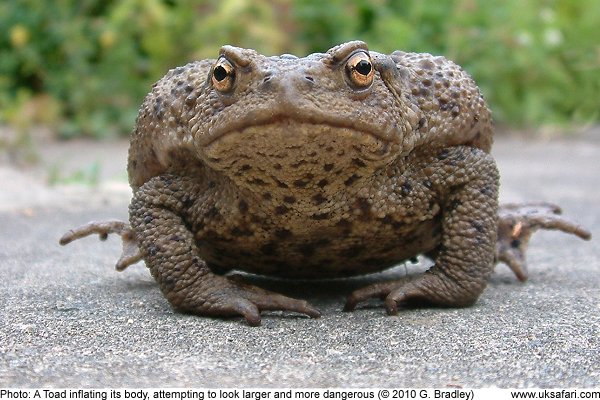
If it feels threatened a toad will inflate its body and stand up on its legs to try and look bigger (see photo).
When you pick a toad up the first thing you'll notice is how bumpy the skin is. The skin of the Common toad is cool and dry to the touch, but it contains a substance that burns the mouths of animals if they try to eat it. The second thing you notice is that your hand is now wet. A toad urinates when it's in danger because getting rid of excess water reduces its body weight making it ready for a fast escape.
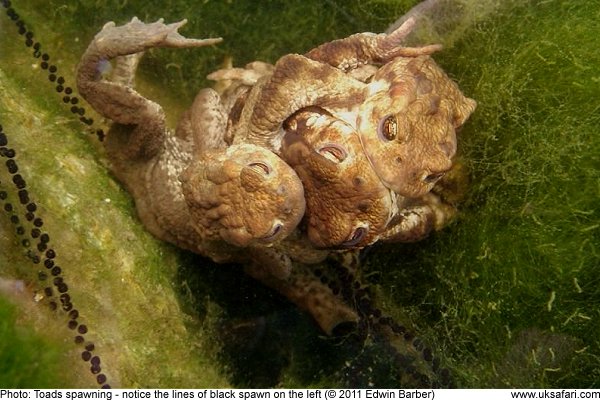
Toads are easier to find in the springtime when they walk for long distances across land to return to their breeding ponds. They usually head towards the original pond where they developed. The spawn of the common toad is laid in strings, unlike frog spawn which is laid in clumps. When they first leave the ponds the baby toads look like miniature replicas of their parents.

 Related Pages
- Photo of an albino Common Toad
- What's an Amphibian?
- How to Tell the Difference between a Frog and a Toad
- UK Safari Amphibians Section
- Free Newsletter
- Help Support UK Safari



 Popular Pages
Amphibians, Bats, Badgers, Beetles, Birds, Birds of Prey, Bumble Bees, Butterflies, Caterpillars, Creepy-Crawlies, Deadly Spiders, Dolphins, Dragonflies, E-Postcards, False Widow Spiders, Free Newsletter, Frogs, Fungi, Garden Spiders, Glow-Worms, Grey Squirrels, Hedgehogs, House Spiders, Ladybirds, Mammals, Marine Mammals, Moths, Owls, Reptiles, Spiders, Toads, Trees, Wildlife Hospitals
© Copyright 2017 G. Bradley - UK Safari | About Us | Links | Contributors