

 Bumblebees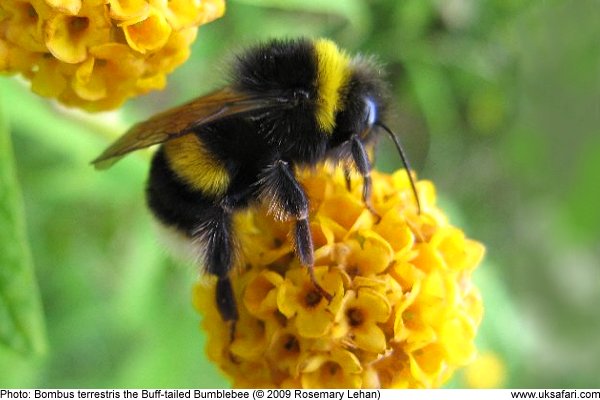

 Quick Facts
Scientific name: Bombus sp.
Size: Up to 25mm
Distribution: Found throughout the UK
Months seen: February to October
Life Span: Approximately 9 to 12 months
Habitat: Meadows, parks, gardens, orchards and farmland
Food: Nectar and pollen
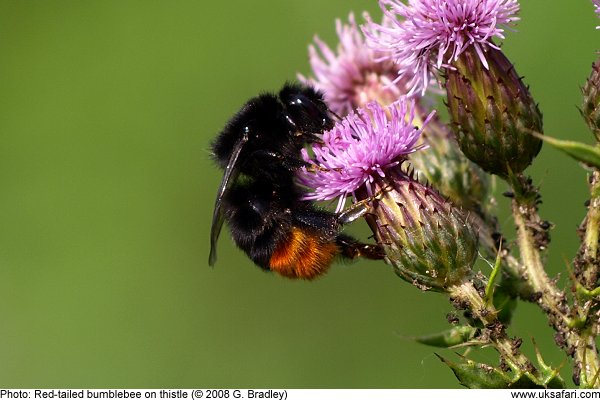
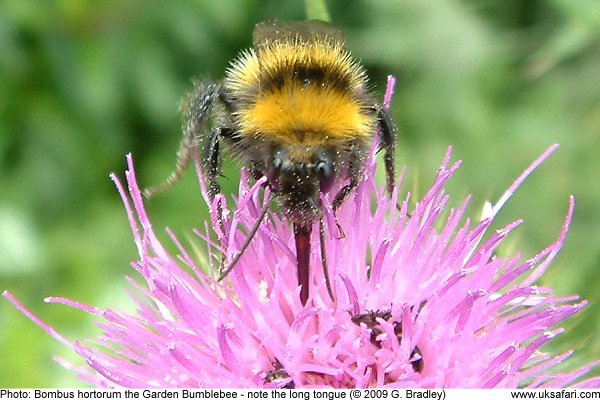
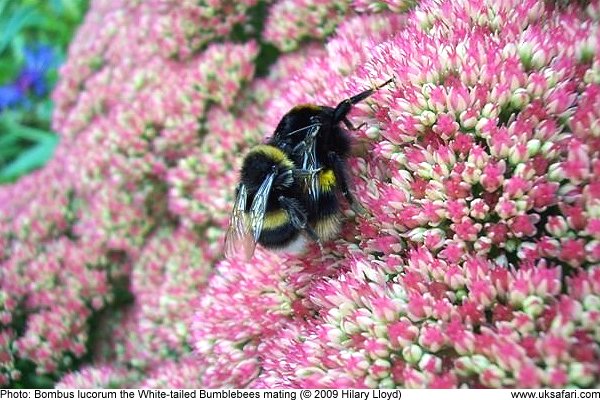
Special features: Twenty five species of bumble bee have been recorded in the U.K., but only six species of bumblebee are commonly seen in UK gardens. Although they are quite large insects they're relatively harmless, and will only sting if provoked. Bumblebees make a distinctive buzzing sound as they fly.
Male bumblebees survive until late autumn and then die off with the onset of winter. Mated females hibernate through the winter and emerge from sleep in February. Their first priority is to find food and a nest site to lay their eggs.
Bumble bees feed on pollen and nectar. The pollen provides them with proteins and the nectar supplies them with sugar for energy. As they feed, they perform a vital role in nature by pollinating many plants and trees.
Bumblebees frequently nest in holes in sand banks, or in old mouse holes (which often have the added luxury of old mouse bedding).
Bumblebees are social insects, and a nest, or colony, may contain up to 200 bees. This is quite small in comparison to honey bee colonies which can have 100,000 bees.
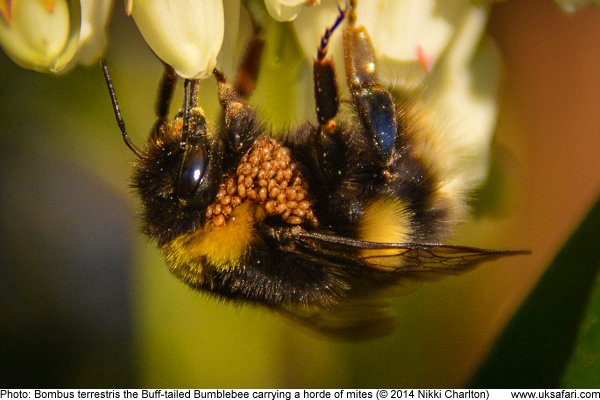
Whens bumblebees visit flowers for food they sometimes pick up tiny orange-coloured mites. The mites hitch a lift on the bees to other sites where they can start new colonies. Most of the time they're relatively harmless, but too many can weigh the bee down and make it difficult for the bee to fly. In severe cases they can immobilise the bee and cause it to starve.
 Related Pages
- Bumblebees Mating (video)
- What do bumblebee babies look like?
- How Bumble Bees Got Their Name
- How to Repair a Bumble Bee
- How to Build a Bumble Bee House - Archive File
- Invertebrate Section
- Free Newsletter



 Popular Pages
Amphibians, Bats, Badgers, Beetles, Birds, Birds of Prey, Bumble Bees, Butterflies, Caterpillars, Creepy-Crawlies, Deadly Spiders, Dolphins, Dragonflies, E-Postcards, False Widow Spiders, Free Newsletter, Frogs, Fungi, Garden Spiders, Glow-Worms, Grey Squirrels, Hedgehogs, House Spiders, Ladybirds, Mammals, Marine Mammals, Moths, Owls, Reptiles, Spiders, Toads, Trees, Wildlife Hospitals
Copyright © 2020 G. Bradley UK Safari. All rights reserved | About Us | Links | Contributors