

 Brown Hares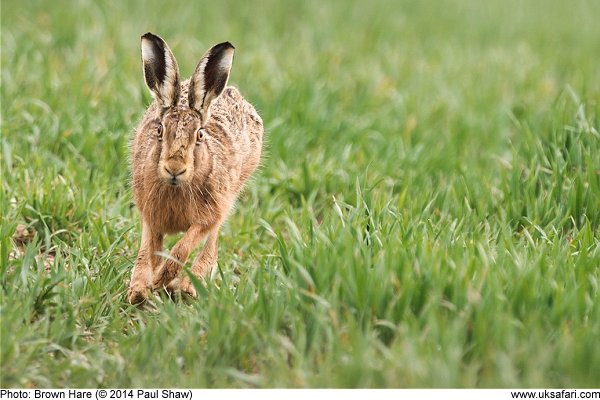

 Quick Facts
Scientific name: Lepus capensis
Size: Grows to approx 55cm. The females are usually slightly heavier/larger than the males. Adults weigh up to 4kg
Distribution: Not common, but found in most parts of Britain. Rare in Ireland, and absent from the Scottish Highlands
Months seen: All year round
Life span: Up to 4 years
Habitat: Mainly found on agricultural land, especially in pasture fields and cereal crop fields. Sometimes in woodland and heathland
Food: Grasses, cereals and other low growing vegetation
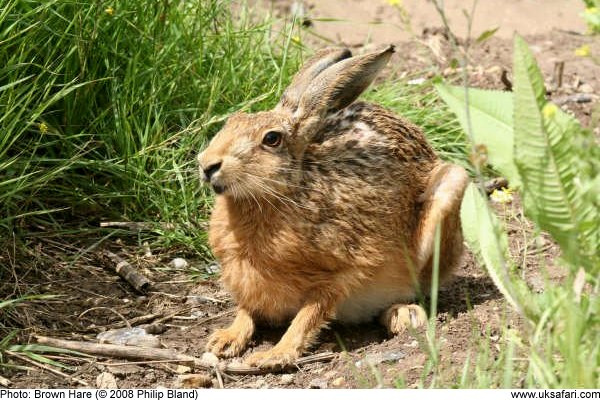
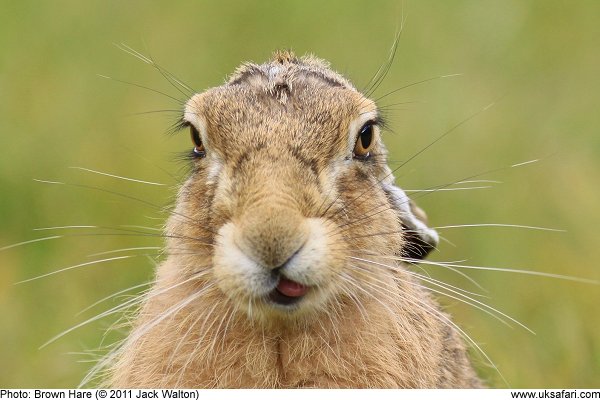
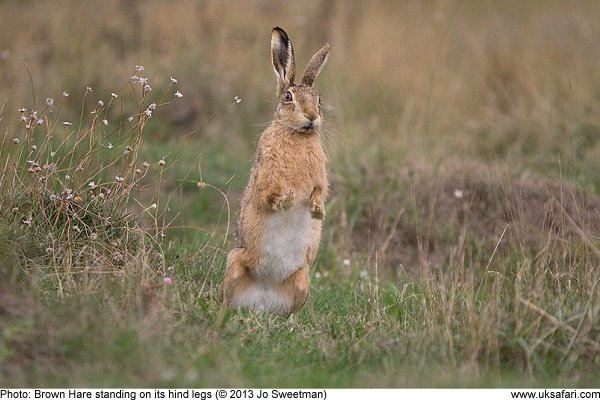
Special features: Brown hares have long ears with black tips, and they have longer legs than rabbits. They are the fastest land mammal in the UK. Their long back legs allow them to run at speeds of up to 45mph.
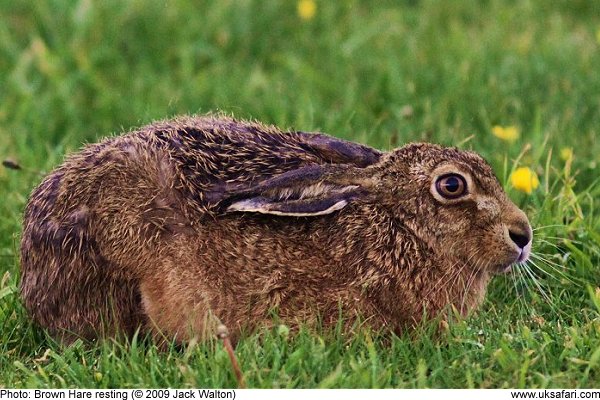
They are most active early in the morning or late in the evening which is the best time to look for them. During the daytime they remain hidden by lying down in fields with their ears flat along their backs.
In March and April, hares exhibit more energy, and can be seen leaping about, and rushing around in wild chases.
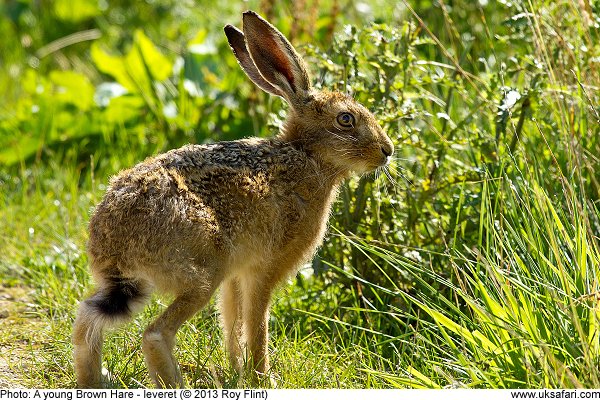
Hares can breed at any time of the year. They produce a litter of up to three young which are called 'leverets'
 Related Pages
- Irish Hares Fact File
- Mountain Hares Fact File
- UK Safari Mammals section
- Identify other wildlife
- Free Newsletter



 Popular Pages
Amphibians, Bats, Badgers, Beetles, Birds, Birds of Prey, Bumble Bees, Butterflies, Caterpillars, Creepy-Crawlies, Deadly Spiders, Dolphins, Dragonflies, E-Postcards, False Widow Spiders, Free Newsletter, Frogs, Fungi, Garden Spiders, Glow-Worms, Grey Squirrels, Hedgehogs, House Spiders, Ladybirds, Mammals, Marine Mammals, Moths, Owls, Reptiles, Spiders, Toads, Trees, Wildlife Hospitals
Copyright © 2020 G. Bradley UK Safari. All rights reserved | About Us | Links | Contributors