

 Making Your Garden Buzz
News > Making Your Garden Buzz >
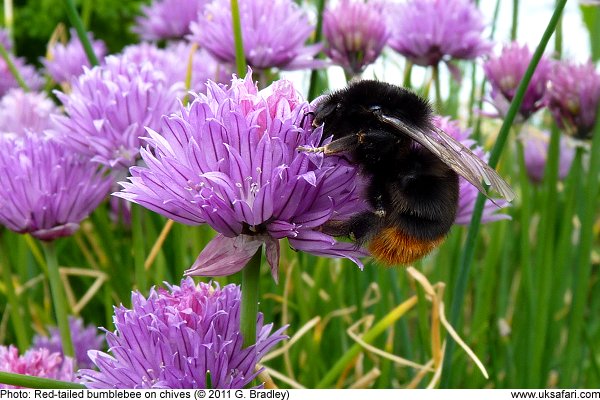
Declining Numbers
They're fuzzy, friendly, noisy and possibly the most important pollinators in our gardens, but our native bumblebees are under serious threat.
Intensive agricultural practices and a decrease in the number of insect pollinated crops have led to a drastic decline in bumblebee numbers over the past seventy years, with one species, Bombus subterraneus, recently driven to extinction.
This is what conservationists call "a bad thing" (they love using technical jargon). It's not just bad because bumblebees are fascinating insects, but because they're responsible for a sizeable proportion of our own food production. Many arable and horticultural crops depend on bumblebees for pollination.
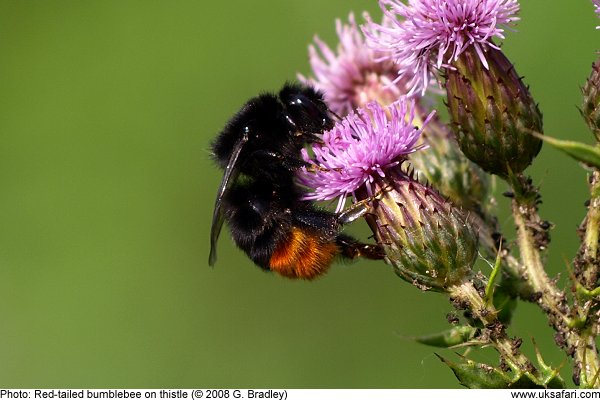
The Importance of Gardens
As a result of drastic changes in land use, gardens have now become increasingly important refuges for bumblebees. Gardeners have a vital role to play in creating the right habitat to help our humble bumbles survive. But what is the right habitat for bumble bees?
Bee Hotels (no stars)
For many people, the idea of creating a good habitat for bumblebees is to simply go out and buy one of those ready made 'bumblebee hotels', stick it somewhere between the decking and the tarmac driveway (next to the patio heater), and wait for the bumble bee population to grow exponentially. Surprisingly, that doesn't work.
There's a plan showing how to make a bumblebee hotel on UK Safari, but I should mention, it was put there as a result of pressure from subscribers rather than for any proven benefit of bee conservation. The only people who rave about the virtues of these boxes seem to be the folks trying to sell them. From my own experience, and from speaking to others who've tried bumble bee boxes in their gardens they're quite popular with spiders and woodlice, but bees generally tend to ignore them. That's not to say you shouldn't try them. Just don't raise your hopes too much.
Nature's Nest Sites
When you watch queen bumblebees at this time of year you'll see why these man-made boxes aren't quite the bees knees. They fly low along hedge banks, ziz-zagging and buzzing their way through tall grasses to find the ideal nest hole.
It looks very random, but they're quite selective about where they lay their eggs. Generally, if they're given the choice between a grubby old mouse hole on a raised bank, and a shiny new 'Bumblebee Hilton' from the local garden centre, they'll choose the mouse hole every time.
If you're serious about wanting to provide homes for bumblebees then an undisturbed raised bank, sheltered by a hedge, covered in rough grass, with plenty of mouse holes seems to be the ideal habitat.
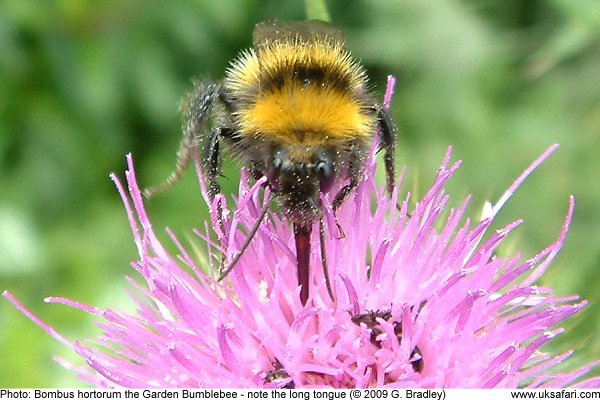
Flower Powered
The easier option is just to provide them with food and let them get on with the business of nesting. Bees will always settle at a site which has plenty of food nearby. Since bumblebees (in fact all bees) feed on pollen and nectar, the best nest site will have plenty of flowering plants nearby - preferably flowering right through their active season from late February through to late October.
It's believed that bumblebees can see ultraviolet colours and so the flowers they make a 'beeline' for (sorry, couldn't resist) are mainly white, blue, purple or yellow.
If you want to make your garden come alive to the sights and sounds of bumblebees, then here are a few plants which they're sure to like:
Bluebell
Dead-nettle
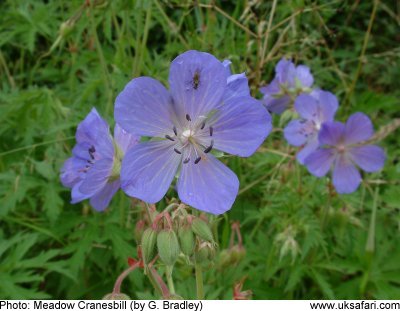
Cranesbill
Foxglove
Honeysuckle
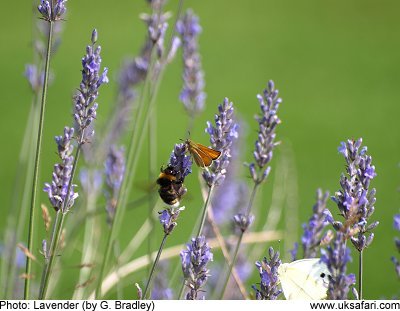
Lavender
Bugle
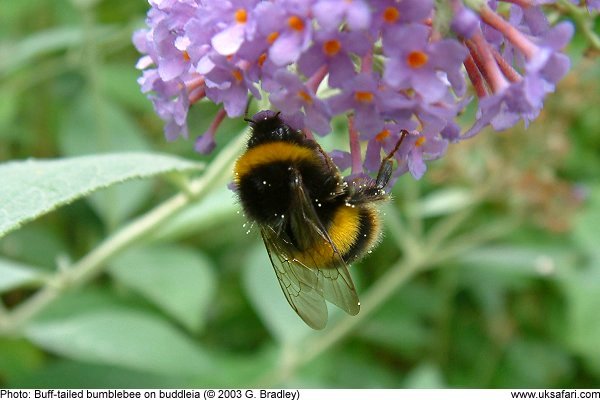
Buddleia
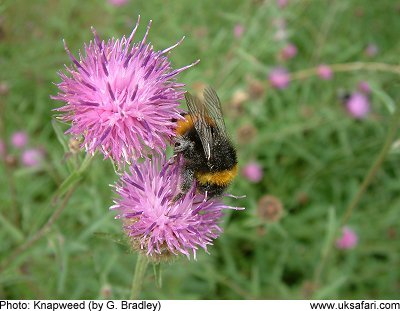
Knapweed
Red Clover
Yellow Rattle
Yellow Archangel
Michaelmas Daisy
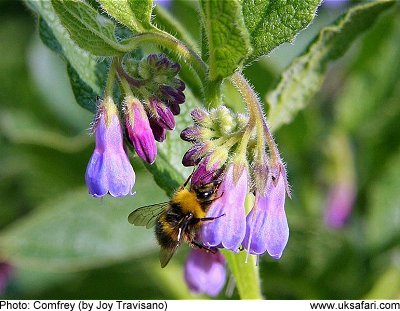
Comfrey
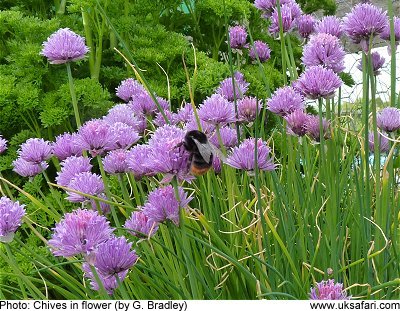
Chives

 Related Pages


 Popular Pages
Amphibians, Bats, Badgers, Beetles, Birds, Birds of Prey, Bumble Bees, Butterflies, Caterpillars, Creepy-Crawlies, Deadly Spiders, Dolphins, Dragonflies, E-Postcards, False Widow Spiders, Free Newsletter, Frogs, Fungi, Garden Spiders, Glow-Worms, Grey Squirrels, Hedgehogs, House Spiders, Ladybirds, Mammals, Marine Mammals, Moths, Owls, Reptiles, Spiders, Toads, Trees, Wildlife Hospitals
Copyright © 2020 G. Bradley UK Safari. All rights reserved | About Us | Links | Contributors