

 Common Pipistrelle Bats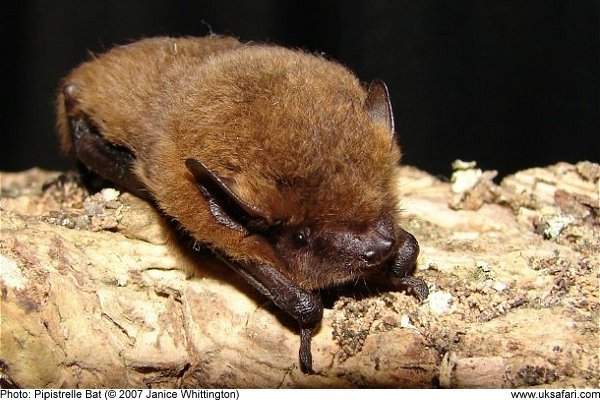

 Quick Facts
Scientific name: Pipistrellus pipistrellus
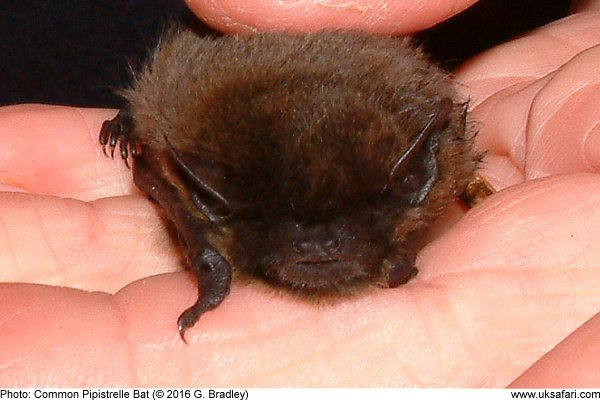
Size: Wingspan up to 24cm. The head and body is around 40mm. Weight approx 5g
Distribution: Found throughout the UK
Months seen: March to November
Habitat: Roosts in buildings, trees and bat boxes
Food: Flies, moths and midges
Echolocation Frequency: 45 - 50 kHz (Listen Here)
Special features: Common Pipistrelle bats are roughly the same weight as a 20p coin. They are the smallest and commonest bats found in the UK. They have darker skin and fur compared to the Soprano Pipistrelles.
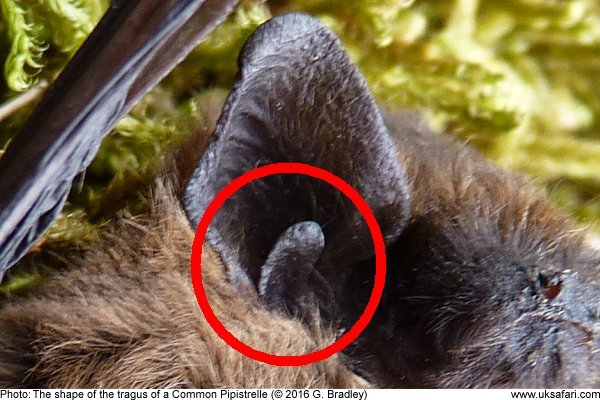
The ears are triangular and the tragus is short and rounded. Pipistrelles emerge from their roost sites at sunset or just after. They fly quickly and erratically around the habitat at a little over head height.
 Related Pages



 Popular Pages
Amphibians, Bats, Badgers, Beetles, Birds, Birds of Prey, Bumble Bees, Butterflies, Caterpillars, Creepy-Crawlies, Deadly Spiders, Dolphins, Dragonflies, E-Postcards, False Widow Spiders, Free Newsletter, Frogs, Fungi, Garden Spiders, Glow-Worms, Grey Squirrels, Hedgehogs, House Spiders, Ladybirds, Mammals, Marine Mammals, Moths, Owls, Reptiles, Spiders, Toads, Trees, Wildlife Hospitals
Copyright © 2020 G. Bradley UK Safari. All rights reserved | About Us | Links | Contributors