

 Devil's Coach-Horse Beetles
Identify It > Invertebrates Section > Beetles Section > Devil's Coach-Horse Beetles >

 Quick Facts
Scientific name: - Staphylinus olens
Size: Up to 28m long
Distribution: Found throughout the UK
Months seen: April to October. Most sightings in late summer and early autumn
Life Span: Approximately 9 - 12 months
Habitat: Woodlands, meadows, gardens and hedgerows
Food: Insects, spiders, worms and woodlice
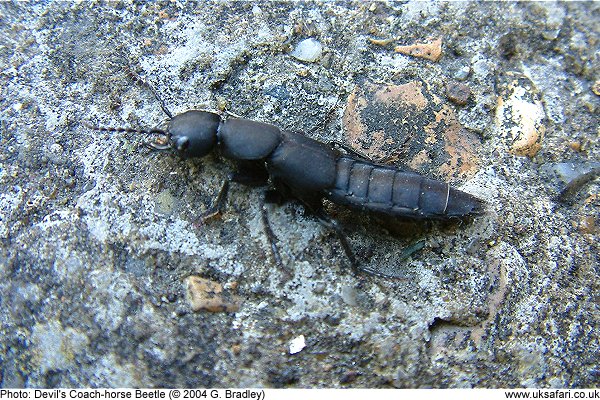
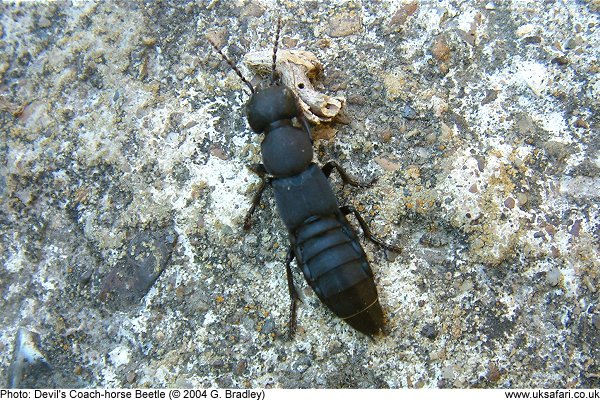
Special features: The Devil's Coach-horse Beetle is one of around 1000 species of 'rove' beetles found in the UK. It is a fast moving beetle which is capable of flight, but prefers to spend most of its life on the ground.
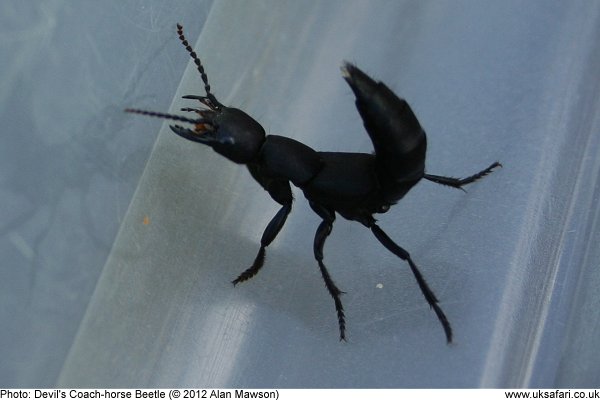
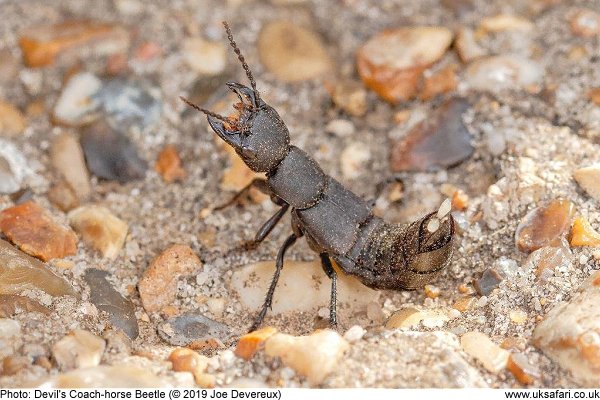
The other popular name for this beetle is 'Cocktail', because of its habit of raising its tail like a scorpion (see photos above) when it feels threatened. For extra effect it usually opens and closes it's large jaws. The 'Devil's Coach-horse' name came from Irish mythology where this particular beetle was considered symbol of corruption. It was believed to have the power to kill on sight, and that it would eat sinners. When the beetle raised its tail, it was thought to be casting a curse.
It cannot sting like a scorpion, but it does have another, rather bizarre defense mechanism. At the end of its abdomen are a pair of white glands which can emit a foul smell. It can also squirt a stinking brown fluid from its mouth and anus.
The Devil's Coach-horse is a carnivorous insect, feeding on other insects and other small creatures. Its pincer-like jaws are used to crush and kill its prey.
 Related Pages



 Popular Pages
Amphibians, Bats, Badgers, Beetles, Birds, Birds of Prey, Bumble Bees, Butterflies, Caterpillars, Creepy-Crawlies, Deadly Spiders, Dolphins, Dragonflies, E-Postcards, False Widow Spiders, Free Newsletter, Frogs, Fungi, Garden Spiders, Glow-Worms, Grey Squirrels, Hedgehogs, House Spiders, Ladybirds, Mammals, Marine Mammals, Moths, Owls, Reptiles, Spiders, Toads, Trees, Wildlife Hospitals
Copyright © 2020 G. Bradley UK Safari. All rights reserved | About Us | Links | Contributors