

 Earwigs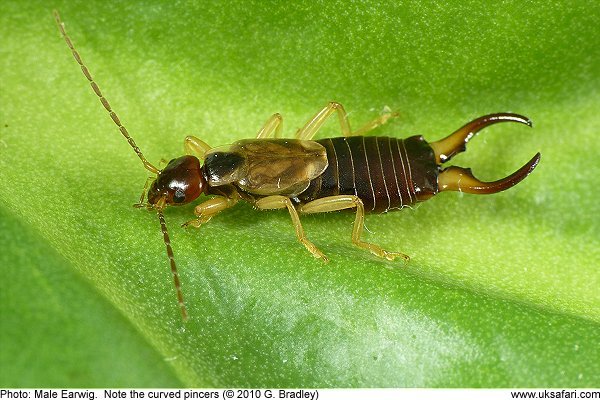

 Quick Facts
Scientific name: Forficula auricularia
Size: Approx 12mm long
Distribution: Found throughout the UK
Months seen: All year round
Life span: Up to 10 months
Habitat: Normally found under stones, compost heaps and in any small crevices. In summer they tend to be found in hiding places high off the ground
Food: Mostly dead plant material, flowers, pollen and some insects
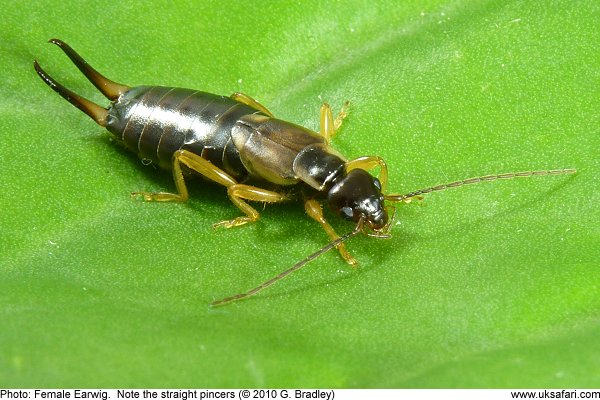
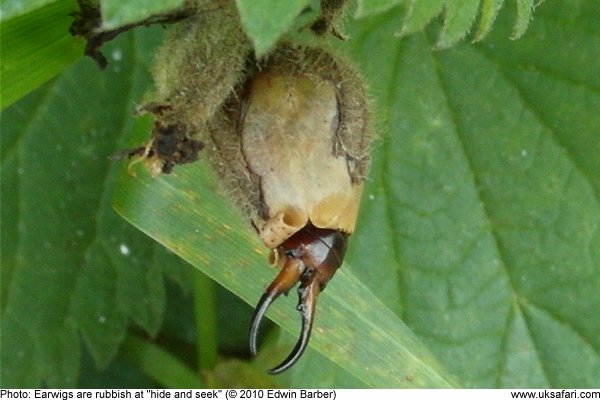
Special features: Earwigs (sometimes called 'pincher bugs') can immediately be recognised by the pincers at the end of the body. known as 'cerci'. The cerci of the female are straight, while the cerci of the male are curved. The cerci are used mainly for defence.
The other way to tell male and female earwigs apart is by counting the segments on the abdomen. The abdomen of a male earwig has ten segments, while the female has only eight.
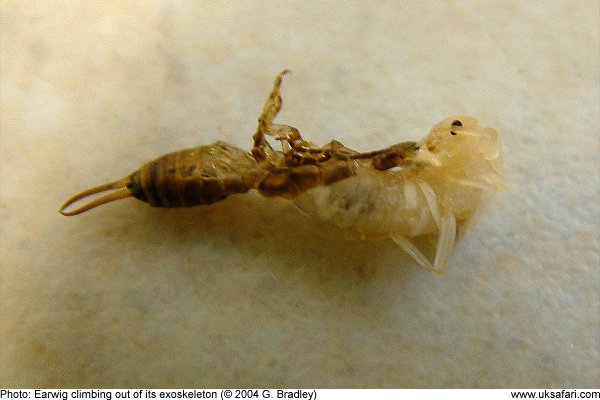
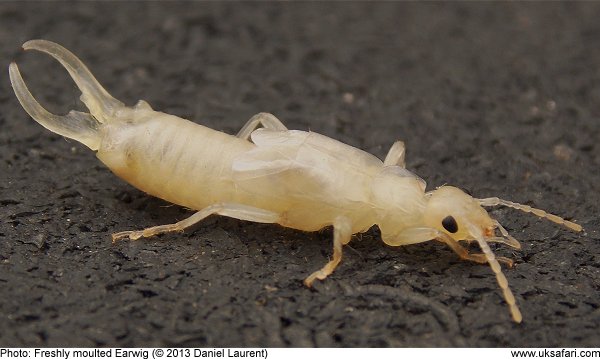
The earwig life cycle goes through three stages - egg to nymph to adult. A newly hatched earwig looks similar to the adult, but much smaller. As it grows, a young earwig has to shed its outer skin several times. The new skin underneath is white at first, but after a few hours it begins to darken.
It takes about ten weeks to go from the egg to the fully grown adult stage. Earwigs are well known for their parental care, which is unusual among insects. The females guard their young until they are well grown.
Earwigs are nocturnal, and during the day they like to sleep in tight crevices, often in large groups. At night they will often walk into houses after being attracted to a light inside.
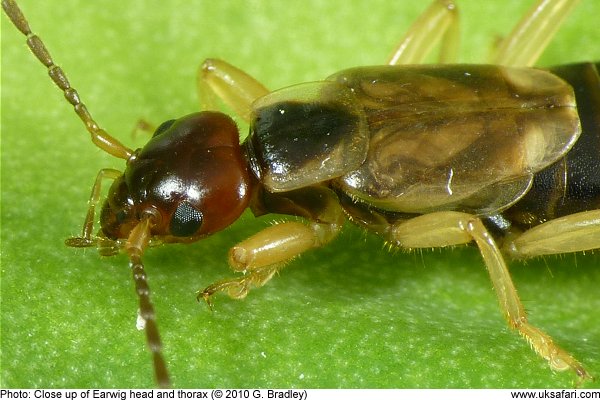
They are capable of flying, and are equipped with quite large hind wings which are intricately folded under the small front wings (which are little more than leathery flaps). When open, the wings are noticeably ear-shaped which may have given rise to the name 'earwing'. It's possible that over time, this name became corrupted and we now call them earwigs.
Another suggestion for the origin of the earwig name is the combination of two Anglo Saxon words, "eard" meaning native soil, and 'wicga' meaning beetle or insect.
 Related Pages



 Popular Pages
Amphibians, Bats, Badgers, Beetles, Birds, Birds of Prey, Bumble Bees, Butterflies, Caterpillars, Creepy-Crawlies, Deadly Spiders, Dolphins, Dragonflies, E-Postcards, False Widow Spiders, Free Newsletter, Frogs, Fungi, Garden Spiders, Glow-Worms, Grey Squirrels, Hedgehogs, House Spiders, Ladybirds, Mammals, Marine Mammals, Moths, Owls, Reptiles, Spiders, Toads, Trees, Wildlife Hospitals
Copyright © 2020 G. Bradley UK Safari. All rights reserved | About Us | Links | Contributors