

 Fly Agaric Fungi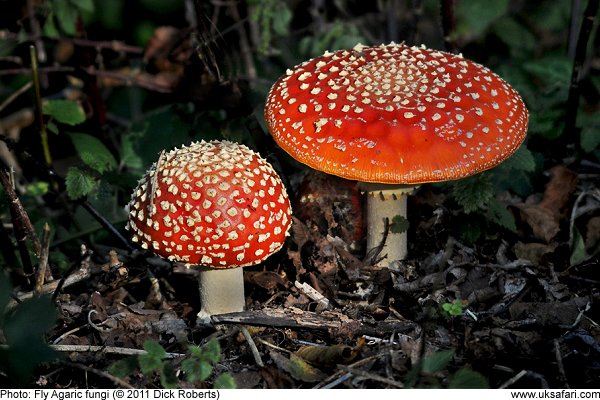

 Quick Facts
Scientific name: Amanita muscaria
Size: Cap up to 25cm across
Distribution: Found throughout the U.K.
Months seen: September to November
Habitat: Often found in pine woodlands and sometimes around the base of birch trees
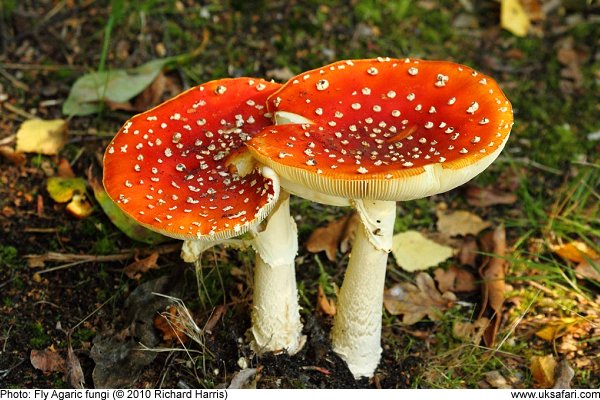
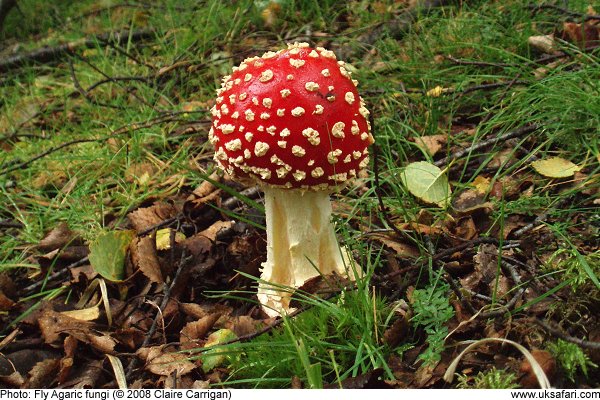
Special features: The fly agaric is probably the most familiar looking fungi. It has tiny, hair-like roots which attach themselves to tree roots. In this way the fungi can siphon off some of the nutrients from the tree. This does not seem to damage the tree in any way. The bright red caps are round when young, and become flat as they mature. The white spots drop off with age. The stem is white, as are the gills.
The fly agaric is not recommended to be eaten. The toxins in this fungi are muscimol and ibotenic acid. They cause hallucinations and violent stomach cramping. The 'fly' name comes from the custom of putting pieces of the toadstools into a saucer of milk to act a flykiller.
 Related Pages



 Popular Pages
Amphibians, Bats, Badgers, Beetles, Birds, Birds of Prey, Bumble Bees, Butterflies, Caterpillars, Creepy-Crawlies, Deadly Spiders, Dolphins, Dragonflies, E-Postcards, False Widow Spiders, Free Newsletter, Frogs, Fungi, Garden Spiders, Glow-Worms, Grey Squirrels, Hedgehogs, House Spiders, Ladybirds, Mammals, Marine Mammals, Moths, Owls, Reptiles, Spiders, Toads, Trees, Wildlife Hospitals
Copyright © 2020 G. Bradley UK Safari. All rights reserved | About Us | Links | Contributors