

 Grasshoppers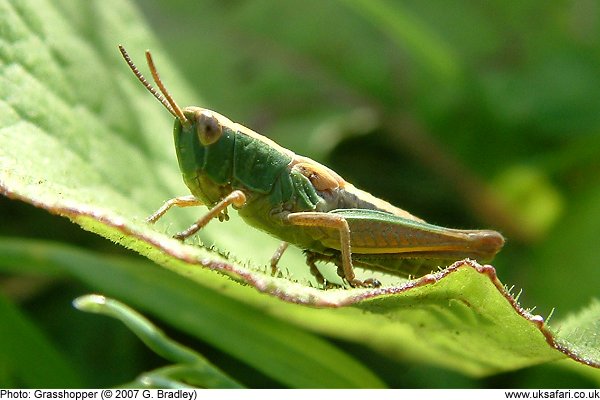
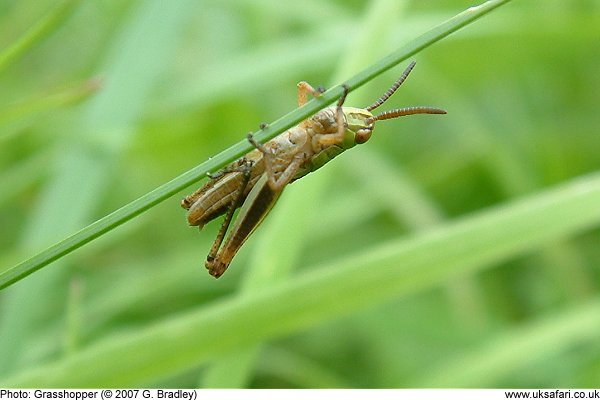

 Quick Facts
Scientific name: Orthoptera
Size: 20mm to 40mm depending on the species
Distribution: Found throughout the UK
Months seen: April to October
Life span: Up to 10 months
Habitat: Meadows and areas of rough grassland
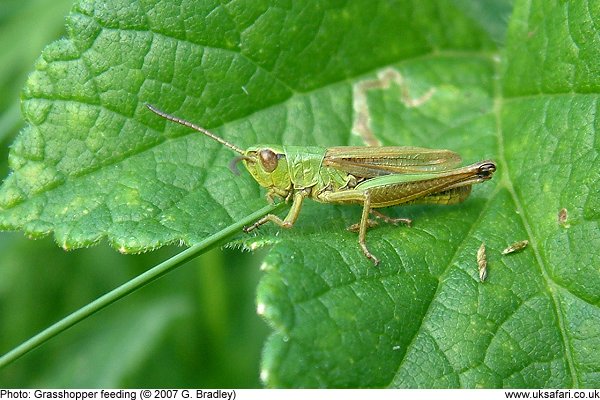
Food: Grass
Special features: For such a small creature the grasshopper can make a surprisingly loud noise. Walk past any patch of tall grass on a summers day and you're sure to hear the males chirping to the females.
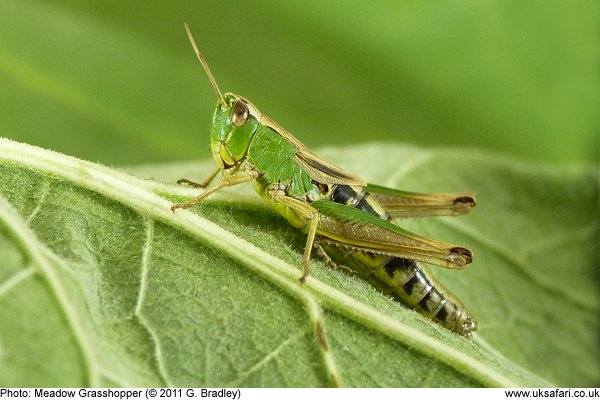
The noise is made by a row of pegs on their back legs, which they rub against their forewings. The wings help to amplify the sound. You can create a similar effect by stroking the teeth of a comb against the edge of a piece of cardboard.
Experts are able to identify different species of grasshopper by the sounds they make. Since each species has a slightly different arrangement of pegs on their legs, the sound they make is unique.
The grasshopper's long, powerful back legs are also used as a defence mechanism. If the grasshopper feels threatened it can leap over relatively long distances, and propel itself out of harms way. Hence the name.
All grasshoppers have large eyes, and hearing organs located on each side of the body, on the abdomen. Their antennae are short and fairly thick compared to the antennae of crickets, which are long and very thin.
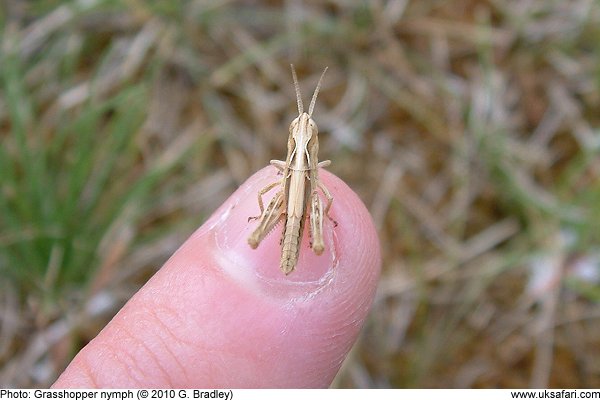
Grasshoppers lay their eggs in dry soil. The nymphs emerge around April or May the following year. There is no pupa or chrysalis stage in their life cycle, they simply grow, and moult several times until they reach adult size around July. The adults can survive until November, but usually die off when the winter weather sets in.
 Related Pages



 Popular Pages
Amphibians, Bats, Badgers, Beetles, Birds, Birds of Prey, Bumble Bees, Butterflies, Caterpillars, Creepy-Crawlies, Deadly Spiders, Dolphins, Dragonflies, E-Postcards, False Widow Spiders, Free Newsletter, Frogs, Fungi, Garden Spiders, Glow-Worms, Grey Squirrels, Hedgehogs, House Spiders, Ladybirds, Mammals, Marine Mammals, Moths, Owls, Reptiles, Spiders, Toads, Trees, Wildlife Hospitals
Copyright © 2020 G. Bradley UK Safari. All rights reserved | About Us | Links | Contributors