

 Great Spotted Woodpeckers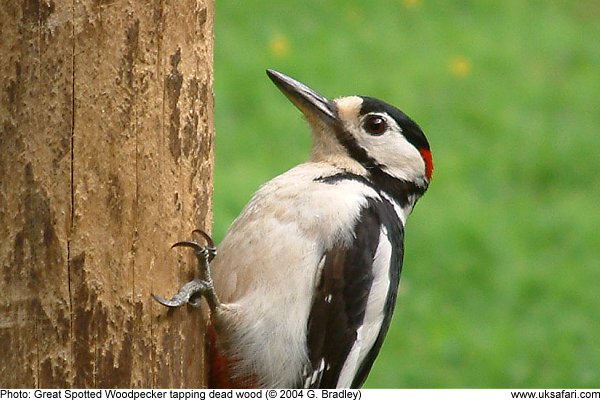

 Quick Facts
Scientific name: Dendrocopus major
Size: Approx 25cm long
Distribution: Found in England, Scotland, Wales and eastern parts of Northern Ireland
Months seen: All year round
Life Span: Over 11 years (source BTO from ringing)
Habitat: Woodlands, parks and gardens
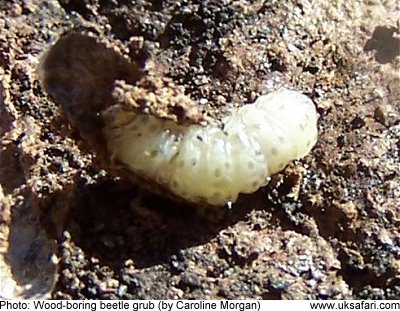
Food: Invertebrates such as wood-boring grubs in dead wood and spiders. Also seeds and nuts
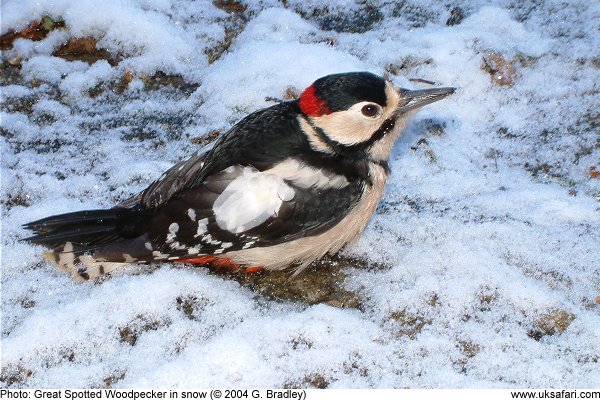
Special features: Great Spotted Woodpeckers are the UK's most common species of woodpecker. They're sometimes called 'pied woodpeckers' because of their black and white colouring.
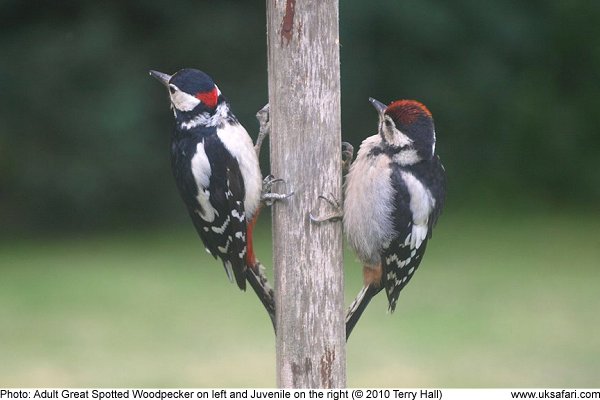
Both the male and female birds have a vivid red patch under the tail, but only the males have a red patch at the back of the neck. Juvenile birds have a red patch on top of their heads.
In late winter and early spring Great Spotted Woodpeckers are very audible, as the males perform their annual territorial drumming solo. This is to tell other males to keep out of their patch of the woods.
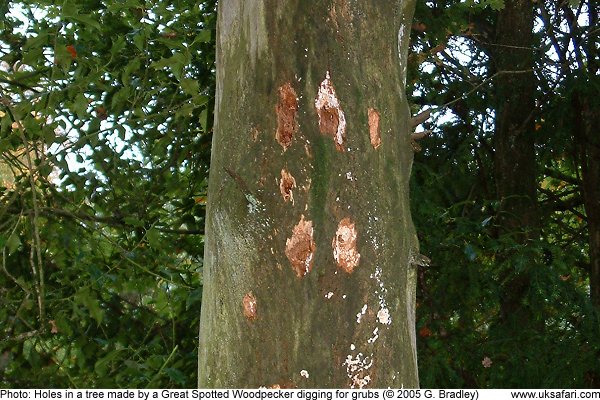
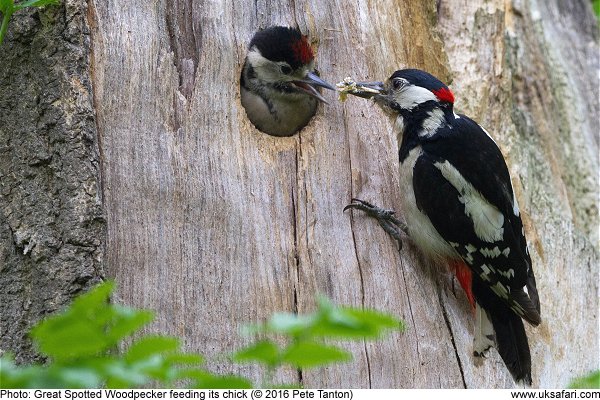
Great Spotted Woodpeckers make their nests by chiseling out a hole in a tree trunk with their beaks. This is also one of the ways in which they find food such as wood-boring grubs. Their strengthened skulls help to cushion the blows. The female lays up to seven eggs, which are all white in colour.
 Related Pages



 Popular Pages
Amphibians, Bats, Badgers, Beetles, Birds, Birds of Prey, Bumble Bees, Butterflies, Caterpillars, Creepy-Crawlies, Deadly Spiders, Dolphins, Dragonflies, E-Postcards, False Widow Spiders, Free Newsletter, Frogs, Fungi, Garden Spiders, Glow-Worms, Grey Squirrels, Hedgehogs, House Spiders, Ladybirds, Mammals, Marine Mammals, Moths, Owls, Reptiles, Spiders, Toads, Trees, Wildlife Hospitals
Copyright © 2020 G. Bradley UK Safari. All rights reserved | About Us | Links | Contributors