

 Mute Swans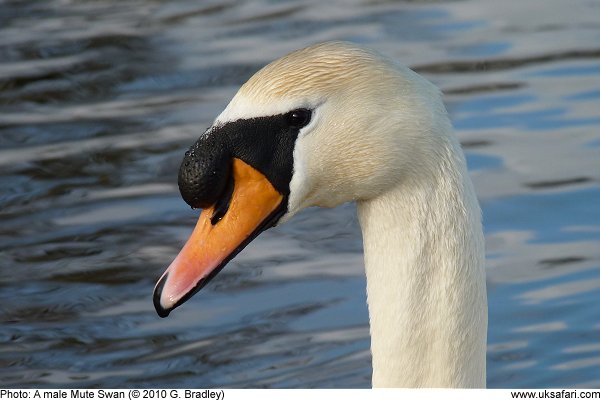

 Quick Facts
Scientific name: Cygnus olor
Size: Approximately 150cm. Wingspan up to 240cm. Mute swans are our heaviest flying birds. A full grown bird can weigh up to 12kg
Distribution: Found throughout the UK
Months seen: All year round
Life Span: Can be up to 40 years, however many die before they are four years old
Habitat: Lakes, reservoirs and rivers
Food: Mostly aquatic vegetation
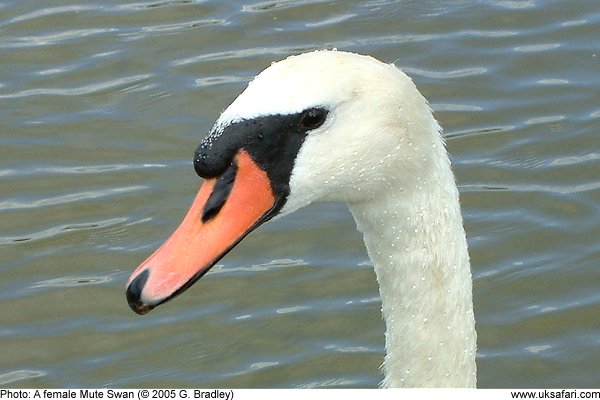
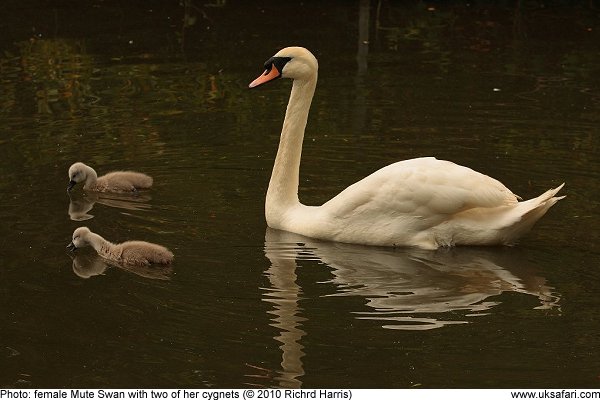
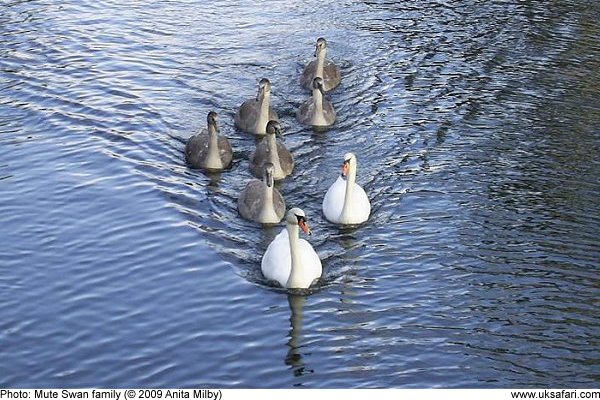
Special features: The mute swan is a familiar sight on many of the rivers, lakes and ponds of the U.K. It is all white, with an orange bill which has a black patch and a black bump or knob at the base. The male swan (cob) has a larger bump than the female swan (pen).
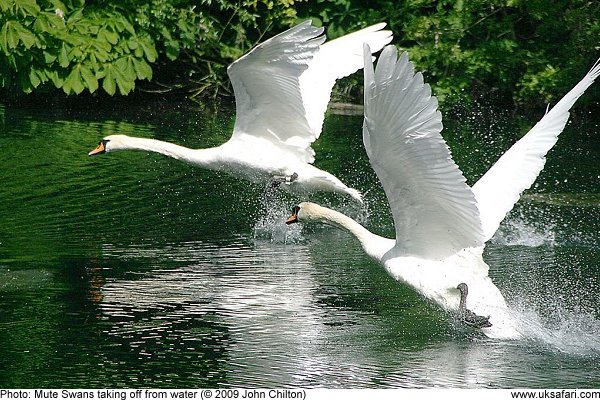
Because mute swans are so heavy that to take off from water they have to flap their wings and paddle along the surface for some distance until they are able to get airborne.
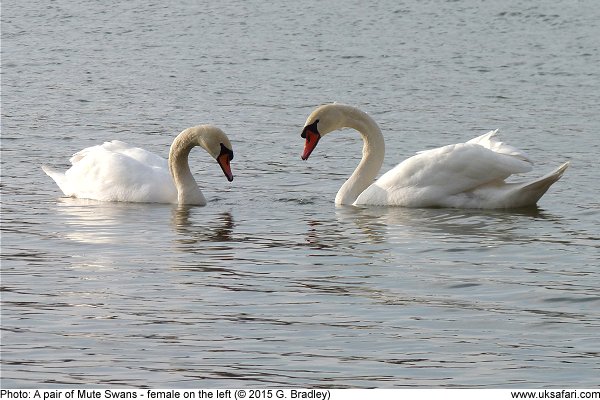
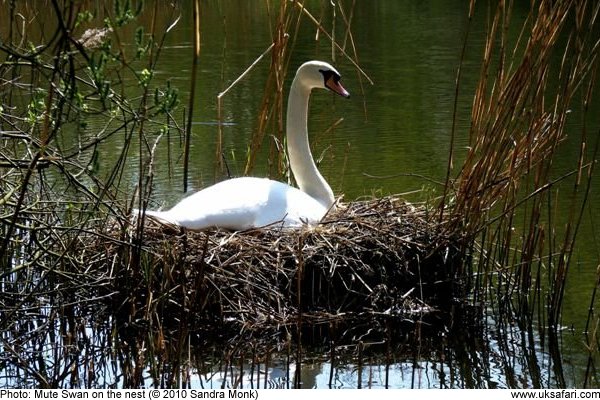
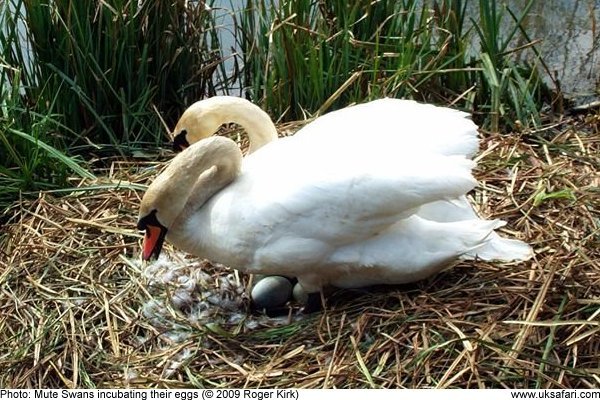
Once paired up, some adult swans will remain together for life. Couples start building their large nests around the end of March. When complete, the female swan lays between 5 and 12 eggs, and the pair take turns incubating them, while fending off anyone or anything which comes near the nest.
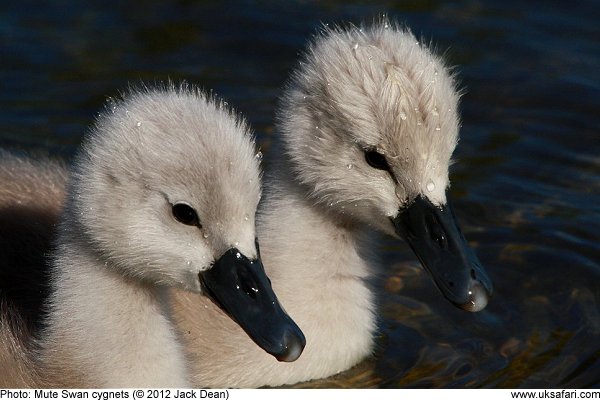
After about 35 days the eggs hatch, and within a few hours the grey coloured chicks (called cygnets) are ready to take to the water with their parents.
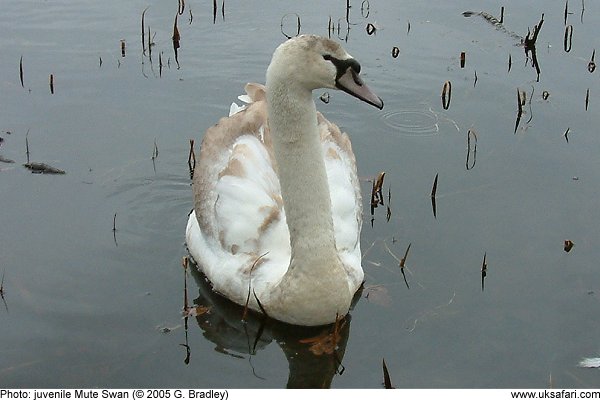
After two months the cygnets start to look scruffy. They still have their soft downy feathers, but their new plumage starts to grow through. At this stage it's easy to see where the idea of "The Ugly Duckling" came from.
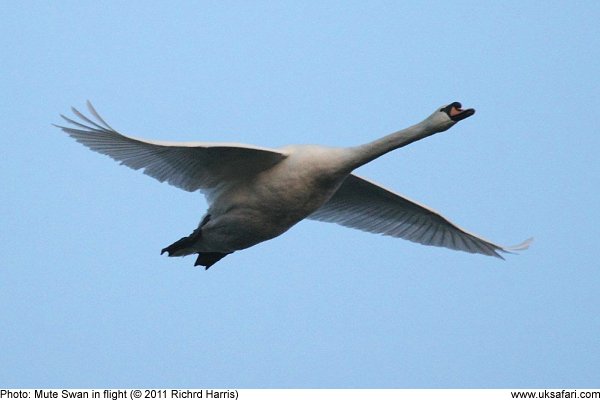
After four months they are able to fly. The cygnets retain some grey feathers until after their first winter. Most birds have between 1,500 and 3,000 feathers, but some swans can have over 25,000.
At the age of two or three they will become sexually mature, and start looking for a mate of their own.
Did You Know?
Richard the Lionheart is said to have brought Mute Swans to the UK from Cyprus after his 3rd crusade, and for centuries swans have been considered 'royal property'.
 Related Pages



 Popular Pages
Amphibians, Bats, Badgers, Beetles, Birds, Birds of Prey, Bumble Bees, Butterflies, Caterpillars, Creepy-Crawlies, Deadly Spiders, Dolphins, Dragonflies, E-Postcards, False Widow Spiders, Free Newsletter, Frogs, Fungi, Garden Spiders, Glow-Worms, Grey Squirrels, Hedgehogs, House Spiders, Ladybirds, Mammals, Marine Mammals, Moths, Owls, Reptiles, Spiders, Toads, Trees, Wildlife Hospitals
© Copyright 2017 G. Bradley - UK Safari | About Us | Links | Contributors