

 Water Voles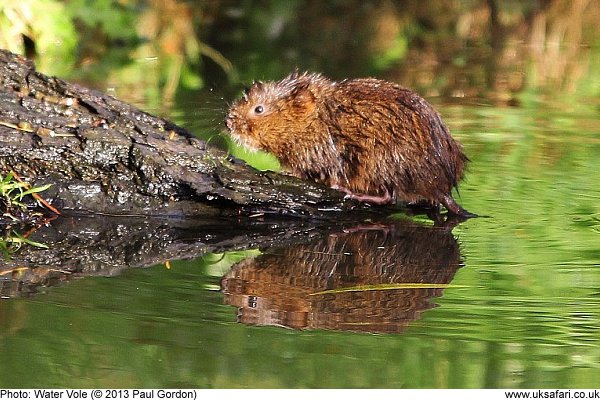
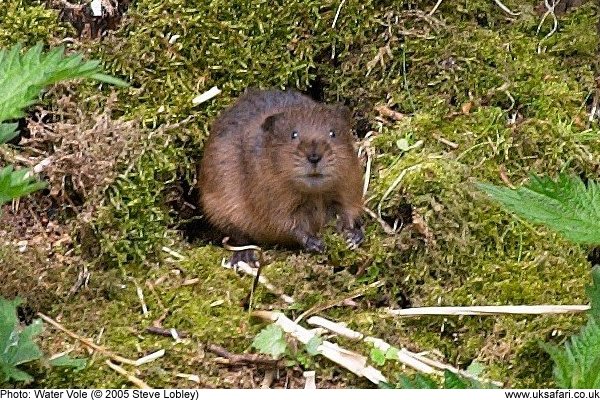

 Quick Facts
Scientific name: Arvicola terrestris
Size: The water vole is the largest British vole, growing to around 30cm in length from head to end of tail. The tail is about 10cm long
Distribution: Declining in numbers but still found in England, Scotland and Wales
Months seen: All year round
Life Span: Up to two years, but frequently less than 6 months
Habitat: Water voles live in burrows in the banks beside ponds, lakes, canals and slow running streams and rivers
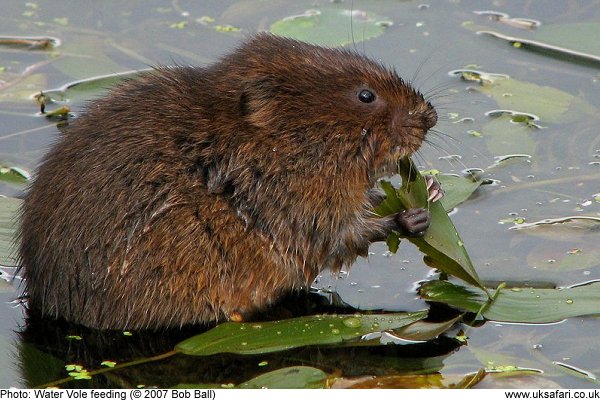
Food: Plants and grasses which grow on, or near the water
Special features: Water voles are best known to English speaking children (and adults) as the famous 'Ratty' from the classic story 'The Wind in the Willows' by Kenneth Grahame. Although it is sometimes called the water rat, it has a much more rounded snout than a rat, smaller ears, and a shorter tail.
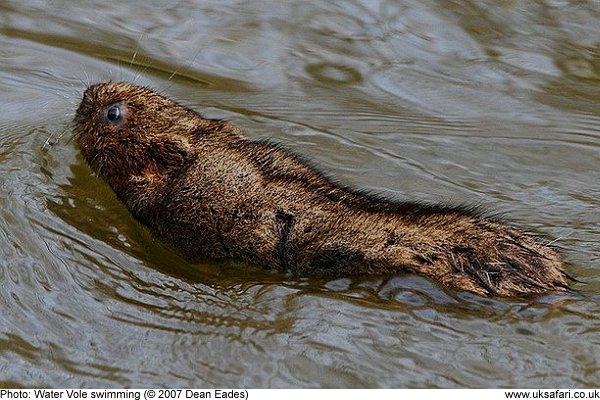
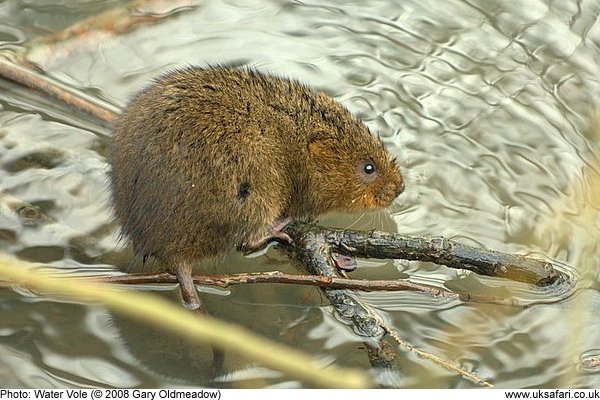
The fur is mostly dark brown in colour with some black hairs and a greyish coloured belly. The males are slightly larger than the females. Water voles have long claws which they use for digging their burrows, and the skin between the toes is webbed to help propel them through the water. Water voles are mostly active during the daytime.
Water voles are the largest vole found in the UK, and are one of the largest voles in the world.
 Related Pages



 Popular Pages
Amphibians, Bats, Badgers, Beetles, Birds, Birds of Prey, Bumble Bees, Butterflies, Caterpillars, Creepy-Crawlies, Deadly Spiders, Dolphins, Dragonflies, E-Postcards, False Widow Spiders, Free Newsletter, Frogs, Fungi, Garden Spiders, Glow-Worms, Grey Squirrels, Hedgehogs, House Spiders, Ladybirds, Mammals, Marine Mammals, Moths, Owls, Reptiles, Spiders, Toads, Trees, Wildlife Hospitals
© Copyright 2017 G. Bradley - UK Safari | About Us | Links | Contributors