

 Scorpion Flies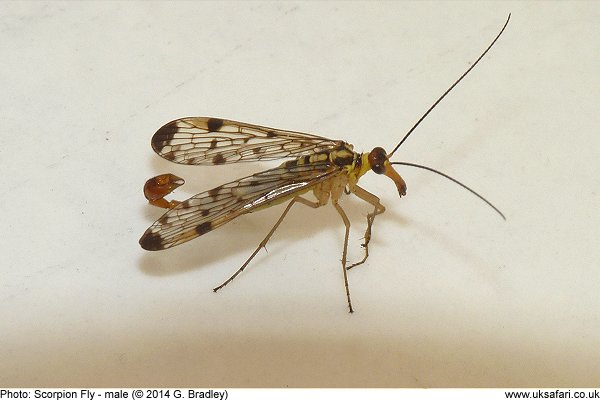

 Quick Facts
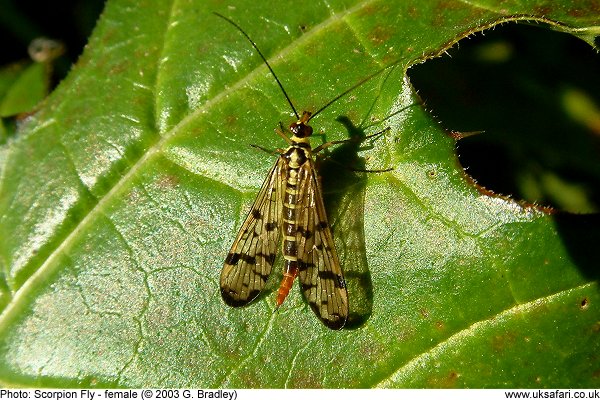
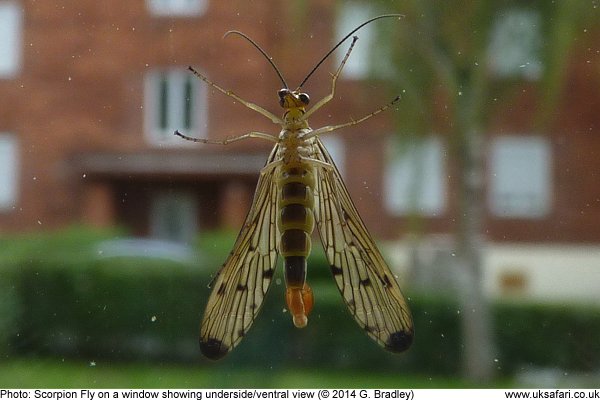
Scientific name: Panorpa communis
Size: Up to 30mm long. Wingspan 35mm
Distribution: Found throughout the U.K.
Months seen: May to September
Habitat: Hedgerows and nettle beds
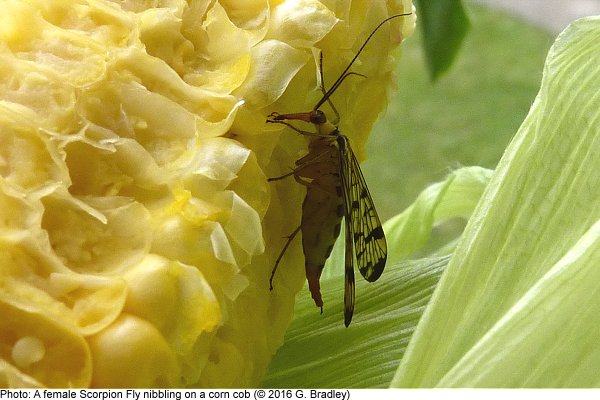
Food: Mostly of dead insects, which they frequently steal from the webs of spiders. Also seen feeding on sweetcorn (see photo)
Special features: Scorpion flies belong to an ancient group of insects known as 'Mecopterans' which can be traced back more than 250 million years. It's believed that butterflies and many other species of insect evolved from their ancestors.
Their heads are extended into a beak-like shape, and their tiny jaws are situated at the end. The name scorpion fly comes from the shape of the males tail, which resembles that of a scorpion. Despite the appearance, they are perfectly harmless, and don't sting. The tip of the tail has a pair of claspers which he uses when mating with the female.
Scorpion Flies usually mate at night. It can be a dangerous time for the male, if he's not careful the female might decide to kill him! To avoid this he presents her with a gift of a drop of saliva, which in the world of Scorpion Flies is the equivalent of a bunch of roses or a box of chocolates.
The female lays her eggs in soil. The larvae which emerge from the eggs are caterpillar-like and live on the soil surface. They pupate in cells in the soil before emerging as adults. Only one generation occurs each year.
 Related Pages
- Yellow-tailed Scorpions
- Devil's Coach-Horse Beetles
- UK Safari Flies Section
- UK Safari Invertebrates Section
- Identify other wildlife
- Free Newsletter



 Popular Pages
Amphibians, Bats, Badgers, Beetles, Birds, Birds of Prey, Bumble Bees, Butterflies, Caterpillars, Creepy-Crawlies, Deadly Spiders, Dolphins, Dragonflies, E-Postcards, False Widow Spiders, Free Newsletter, Frogs, Fungi, Garden Spiders, Glow-Worms, Grey Squirrels, Hedgehogs, House Spiders, Ladybirds, Mammals, Marine Mammals, Moths, Owls, Reptiles, Spiders, Toads, Trees, Wildlife Hospitals
© Copyright 2017 G. Bradley - UK Safari | About Us | Links | Contributors